What EV Charging Stations Cost in India and How Returns Work
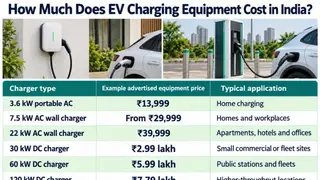
In India, an EV charging station can range from a few thousand rupees for basic home equipment to several lakh for commercial setups, or ₹1–2 crore for a multi-fast-charger site. Costs depend on charger power, grid connection, civil work, land, and operating infrastructure, with public charging economics driven mainly by daily electricity sales. A high-power charger in a low-traffic area may take years to pay back, while a smaller station serving regular fleet users can perform better.
In India, charging setup prices span basic home units costing a few thousand rupees to commercial projects running into lakhs, while multi-fast-charger locations can reach ₹1–2 crore. Hardware alone is not the full picture: sanctioned power, transformers, cabling, foundations, parking works, software, payment systems, leases and commissioning all add to the budget.
A 60 kW example with ₹15 lakh installed cost illustrates sensitivity to utilisation. At ₹18 net revenue per kWh, ₹9 variable cost and ₹3 lakh yearly fixed expenses, 100 kWh daily sales imply very long payback; 200 kWh brings it to about 4.2 years, and 300 kWh improves it further. Actual results depend on local demand and costs.
The economics of charging sites could shape where EV drivers find reliable power and how quickly electric mobility spreads. Fleet operators, small businesses, landowners and investors may weigh daily electricity sales against high upfront costs, while drivers in low-traffic areas might face fewer or pricier charging options. If utilisation stays weak, some projects may struggle to recover investment; if regular fleet demand develops, smaller stations could become more viable and improve local access.