AI agents require trusted state, not just memory, to act safely
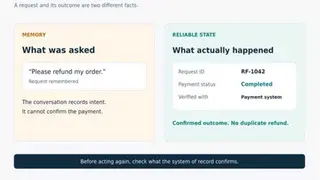
The article argues that AI agents need reliable current state rather than only memory or longer context. A customer-service agent might remember requesting a refund but cannot confirm whether the refund actually completed, leading to duplicate actions. It says systems of record and trustworthy status data are essential for agents that perform real operations.
Teams often improve agent memory, context length, summaries, and retrieval. Those help recall past interactions, but they cannot verify whether an operation finished. A refund request may time out after succeeding, leaving the agent unaware and likely to repeat it.
Similar issues appeared in recommendation systems. Purchase or browsing history can remain accurate while no longer matching present intent, as after an election. Personalization systems needed up-to-date signals. For agents, recorded facts such as whether a trial offer applies or whether a payment completed matter more than inferred preferences.
Customers, businesses, and developers could all feel the effects. If agents rely only on memory, people may face duplicate refunds, incorrect orders, or account changes, while support teams spend time fixing avoidable errors. If trustworthy status records are used, automated service may become more reliable and easier to audit. The broader impact may depend on whether organizations treat verified current state as a core requirement for agents that act, not merely as a technical enhancement.