Roman Space Telescope's main camera surpasses image quality goals by almost 30%
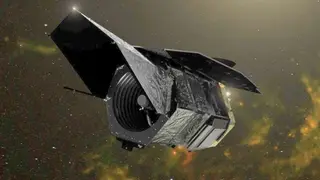
NASA's Nancy Grace Roman Space Telescope team finished calibrations and found its Wide Field Instrument performs nearly 30% better than expected. Engineers checked the instrument's 18 detectors and electronics before continuing with other tests. The observatory is traveling to the second Sun-Earth Lagrange point after launching on August 30.
NASA says the Roman Space Telescope's Wide Field Instrument, a 300-megapixel camera with 18 detectors, performed almost 30% above its image-quality requirement after calibration. Engineers verified those detectors and their electronics, then proceeded to further tests.
The observatory is en route to the second Sun-Earth Lagrange point, roughly a million miles from Earth, after an August 30 Falcon Heavy launch. Commissioning has included activating the Coronagraph Instrument, exercising the Element Wheel, testing calibration LEDs and thermal systems, and making tiny optical alignment changes.
The sharper-than-expected camera could give astronomers more efficient surveys and richer data, potentially benefiting researchers who study exoplanets, galaxies, and cosmic evolution. It may also strengthen public engagement with space science through more detailed images and discoveries. Those gains depend on remaining commissioning and operations, so the practical effect is not yet certain.