Rich nations lag on promised funding for global biodiversity goals
A UN report released before the COP17 biodiversity summit says developed countries have provided far less nature finance than promised. It finds the $200bn annual biodiversity finance gap remains unclosed, with a dedicated framework fund receiving under $140m over two years and the Cali Fund only $6,000 from companies. The issue is expected to be contentious when negotiations begin in Yerevan, Armenia, on 19 October.
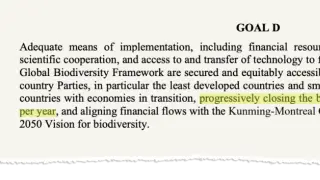
At COP15 in 2022, 196 nations adopted the Kunming-Montreal framework, aiming to reverse biodiversity loss by 2030. Its financing blueprint seeks to close a $700bn gap: $500bn from reforming harmful subsidies and $200bn from mobilised resources.
The CBD stocktake says countries generated $186.4bn cumulatively from 2020-23, under $50bn yearly. International public biodiversity funding averaged $4.4bn annually. OECD data put global nature finance at $74.9-92.4bn yearly in 2023-25, with international public flows about $16.1bn yearly, nearly $4bn short of the 2025 target.
If funding remains below targets, conservation projects in developing countries may face delays or cuts, potentially affecting communities that depend on healthy ecosystems. Companies may face continued scrutiny over Cali Fund contributions. COP17 negotiations could shape trust between developed and developing nations, though outcomes remain uncertain.