Bacterial enzyme devours some plastics and penicillin
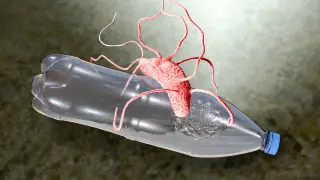
Researchers at the University of Konstanz identified a bacterial enzyme that breaks down certain polyesters and biodegradable plastics. Nicknamed the Pac-Man enzyme for its unusually wide active site, it can also degrade penicillin, suggesting a possible link to antibiotic resistance. In soil tests, several biodegradable plastics fully decomposed within about a year, while conventional plastic remained largely intact.
Researchers at Konstanz studied long-chain aliphatic polyesters, or LCAPs, created by Stefan Mecking's group. These materials have bonds microbes can potentially split, unlike many conventional plastics. The team buried film samples roughly ten centimeters deep in forest humus at the botanical garden and analyzed microbial communities and their metagenome.
The enzyme's unusually broad active site earned it the Pac-Man nickname. It can degrade selected polyesters and biodegradable plastics, and also penicillin. In soil trials, some biodegradable plastics fully decomposed in about a year, while ordinary plastic stayed mostly unchanged. Findings appeared in The ISME Journal.
This discovery could inform efforts to design biodegradable plastics and manage plastic waste, potentially affecting manufacturers, waste systems, and communities facing pollution. Because the enzyme also breaks penicillin, its spread may matter for antibiotic resistance, possibly complicating treatment. Yet impact would depend on wider use of biodegradable materials and how enzymes move among microbes.