New Research Explores Family and Mental Health in Van Gogh’s Ear Incident
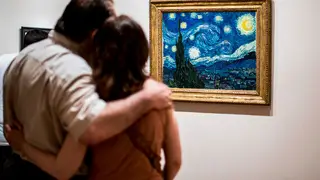
The article explores the family and personal history behind Vincent van Gogh’s decision to cut off his ear and his later suicide. It notes that he painted The Starry Night while staying in a mental asylum and that his mental health was deteriorating. The author argues that understanding his relationships and inner struggles is necessary for interpreting his art.
The article begins at New York’s Museum of Modern Art, where visitors cluster around Van Gogh’s The Starry Night. The painting dates to June 1889, made during his year in a southern French asylum. Rather than a single real view, it combines remembered elements: a village, moon, dark hills, cypress, and starry sky.
Van Gogh shared a yellow house in Arles with Paul Gauguin for several weeks. Many accounts link his ear injury to a conflict with Gauguin, who was preparing to leave. The piece also points to Jo van Gogh-Bonger, whose diaries and letters were recently released by the Van Gogh Museum.
This story may deepen public interest in how family relationships, isolation, and mental illness intersect with creative work. Museum visitors and art lovers could find their understanding of Van Gogh’s paintings shaped by his personal struggles, while people affected by self-harm or suicide may experience difficult emotions. Framing his life through mental health might encourage more compassionate discussion, though it may also risk reducing his art to illness. Its impact may depend on how carefully such narratives are presented.