Japan's MMX Spacecraft Set to Depart for Phobos and Deimos
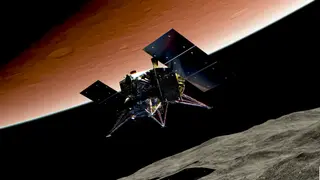
Japan's Martian Moons eXploration (MMX) mission is scheduled to lift off on October 19, 2026, from Tanegashima Space Center. After roughly ten months of travel, the spacecraft will reach Mars and study Phobos and Deimos, including sending a rover to land on Phobos and collect soil. The mission aims to return that sample to Earth in 2031, with the capsule set to land in Australia.
Japan's MMX mission is scheduled to launch from Tanegashima Space Center on October 19, 2026, at 19:41 UTC, which is October 20 in Japan. After roughly ten months, it will reach Mars and its moons.
The spacecraft has propulsion, exploration, and return sections. A rover will land on Phobos and gather soil for a capsule destined for Australia in 2031. Phobos and Deimos, named for fear and terror, are Mars's only known moons; their origin remains debated, with possibilities including captured asteroids, impact debris, or an ancient ring. MMX follows Hayabusa2, which returned Ryugu material containing chemical ingredients tied to life.
If successful, MMX could deepen public interest in planetary science and Japan's space efforts. Researchers studying planetary origins may gain a rare Phobos sample, potentially reshaping ideas about Mars's moons. The 2031 capsule return could draw attention in Australia and worldwide, while the mission may inspire students and support international collaboration. Its findings might also inform future exploration of Mars and its moons, though outcomes remain uncertain.