Valuation pullback may not signal a market downturn
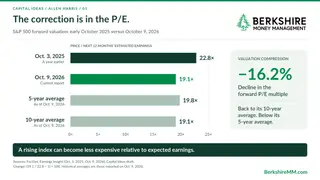
The column examines whether a decline in S&P 500 valuation multiples, rather than a price drop, could affect future returns. It notes the index’s price-to-earnings ratio has fallen to its 10-year average while third-quarter 2026 earnings are projected to grow sharply. Historical comparisons show gains in most similar periods, though bank stocks are undergoing a real correction and diversification remains important.
The S&P 500's forward P/E moved from 22.8 in October 2025 to 19.1 recently, a 16.2% decline. That places it at its 10-year average and under its five-year average of 19.8. Meanwhile, projected Q3 2026 earnings growth is 29.6%, with estimates of 32.7% for full-year 2026 and 15.8% for 2027.
In 17 similar historical episodes, the index rose an average of 8.6% over the next year, with gains in 76% of cases. About $8 trillion in money market funds could support markets if investors buy dips. Bank stocks, however, are in a real correction, underscoring diversification.
If valuation compression continues without price declines, retirement savers and households with market exposure may see less immediate portfolio damage, though future returns could still vary. A genuine bank-stock correction might affect lenders, borrowers, and local credit conditions if it signals broader stress. The outcome could shape confidence among investors, pension funds, and consumers, while diversification may help buffer individual portfolios.