European and Indian solar probes coordinate first joint CME observations
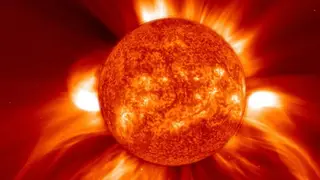
The European Space Agency’s Proba-3 and India’s Aditya-L1 have for the first time observed the same coronal mass ejections from separate vantage points. Their combined measurements covered the eruptions’ mass, density, and energy, with results published in Astronomy & Astrophysics. Aditya-L1 operates near the first Earth-Sun Lagrange point, while Proba-3 uses two spacecraft in a highly elliptical Earth orbit to create artificial eclipses for coronal studies.
Europe’s Proba-3 and India’s Aditya-L1 observed the same coronal mass ejections from distinct positions, marking a first for the two missions. Aditya-L1 sits near the first Earth-Sun Lagrange point, about one million miles from Earth. Proba-3 uses two craft in a highly elliptical Earth orbit, flying in formation to produce artificial eclipses.
During joint work from July to December 2025, ASPIICS on Proba-3 measured a CME’s shape, motion, and mass, while Aditya-L1’s VELC supplied density and thermal-energy data. One September 14 eruption moved at 400 miles per second; a September 16 event moved at 90 miles per second.
Better joint observations of early CME behavior could sharpen space-weather forecasts, potentially helping satellite operators, power-grid managers, and communication and navigation users prepare for disruptions. Because intense CMEs may disturb near-Earth space, affect radio and GPS signals, damage satellites, or cause blackouts, improved warning lead time could reduce operational risks. The benefit is not guaranteed; it depends on how quickly these research measurements are translated into practical forecasting tools and how reliably they capture eruptions headed toward Earth.