New 'Areth' Framework Organizes Martian Soil Types
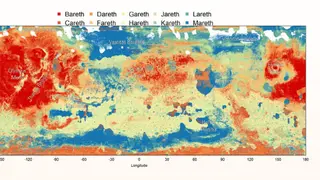
A University of Sydney team proposed the Provisional Polythetic Areth Classification System, or PPACS, for Martian soils, using mostly orbital data on surface and near-surface properties. The framework has 10 realms, 10 assemblages per realm, and 20 forms per assemblage, yielding 2,000 classes, and is paired with a map covering 92% of Mars. The researchers evaluated the classes for plant-growing traits and identified Nohibareth as the highest-scoring candidate.
Mars has no settled soil taxonomy. Earth-based systems rely on layered horizons, but depth-resolved measurements for the Red Planet remain scarce. The Sydney team's PPACS therefore draws mainly on orbital observations of surface and near-surface traits, organizing Martian soils into ten realms, each divided into ten assemblages and twenty forms — 2,000 classes overall. A companion map covers 92% of the planet.
The researchers also graded every class for plant-relevant traits including water retention, acidity, profile thickness, and clay and gravel content; Nohibareth scored highest at 0.93.
A shared classification could help researchers compare rover findings across missions and sites, giving mission planners and habitat engineers a common vocabulary. Its plant-suitability scoring may inform early concepts for Martian agriculture, though such growing remains speculative. The work might also prompt renewed interest in low-organic-matter soils on Earth, particularly in arid regions. Broader societal effects would likely depend on whether crewed settlement or orbital agriculture advances.