White Dwarfs Can Display Surprising Colors
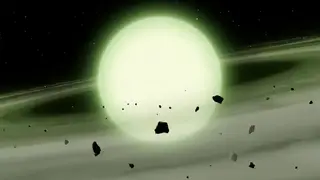
Astronomers report that the white dwarf J1330 has a greenish appearance caused by its sodium-rich atmosphere absorbing certain wavelengths. Their work suggests that dead stars can show a range of colors, including pink and purple, even though ordinary stars generally do not look green.
The report revisits the familiar claim that stars cannot look green. In ordinary stars that fuse hydrogen, temperature shapes the emitted spectrum, while atmospheric absorption has only a small influence on perceived color.
White dwarfs are different: they are exposed, ultradense stellar cores with immense surface gravity. J1330’s sodium-rich atmosphere removes particular wavelengths, giving it a greenish tint; the work indicates other dead stars could appear pink or purple.
This finding may mainly affect astronomy education and public communication, because it complicates the simple rule that stars never look green. Planetarium presenters, science writers, and students could need to distinguish ordinary stars from white dwarfs when discussing color. It may also interest amateur observers and artists depicting astronomical objects, though the practical impact on daily life is likely minimal. The result could encourage more careful use of models that translate spectra into human-perceived colors.