Cambrian Fossil Points to Tentacled Ancestor for Starfish Relatives
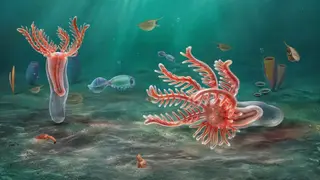
A newly described 518-million-year-old species from China, Yujingia glutenotunica, had a soft bottle-shaped body and feathery tentacles used to capture food. Its anatomy places it near the shared ancestor of echinoderms and hemichordates, challenging the idea that this ancestor was a burrowing worm. The find suggests early ambulacrarians may have been more like attached, tentacle-feeding animals.
The specimens come from Yunnan’s Maotianshan Shales, a Cambrian site known for soft-bodied preservation. Yujingia glutenotunica measured 8–22 mm and had a bottle-like, gelatinous body, with feathery tentacles for collecting food particles and a second set of appendages for attachment.
A comparison of anatomical features across 100 living and fossil species positioned the new animal near the ambulacrarian common ancestor. The study appeared in Current Biology’s October 19 issue, with Kaiyue He and colleagues reporting the find.
The find could reshape how paleontologists and biology educators explain the origin of echinoderms, potentially affecting museum exhibits, textbooks, and public understanding of Cambrian evolution. It may also draw more attention to Chinese fossil sites and international research collaborations. Because it concerns deep evolutionary history, its immediate societal effects are likely indirect, felt mainly in science communication and education rather than daily life.