SpaceX's AI segment lifts quarterly results as infrastructure spending climbs
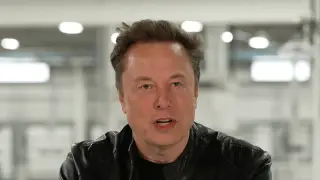
SpaceX's third-quarter results showed AI-related operations outperforming expectations, with its "Super Intelligence" segment generating $7.5 billion in revenue and $431 million in profit. Total revenue reached $14.6 billion, while capital expenditures were $19.6 billion as SpaceX builds Colossus II and invests in Starship. Musk said power, cooling, and infrastructure—not chips—are now the main constraints on deploying advanced AI.
SpaceX’s Q3 revenue was $14.6B, with AI now 52% of income. Its Super Intelligence unit brought in $7.5B and $431M profit; $1.2B stock-based compensation tied to the Cursor acquisition reduced profit. The unit includes Cursor, Grok, and a neocloud with 1.7 GW compute.
Capital spending reached $19.6B as SpaceX builds Colossus II and invests in Starship. CFO Bret Johnsen projected $35B–$40B in Q4 capital investments. Net income was $4.4B, reversing a $1B loss a year earlier, though the first nine months still showed a $413M loss. Starlink reached 13.6M subscribers.
SpaceX’s AI expansion could intensify demand for power, cooling, and data-center infrastructure, affecting utilities, equipment suppliers, and host communities. Its neocloud and Grok/Cursor tools may shape access and pricing for AI developers and businesses. Large capital outlays and ambitious revenue forecasts may influence investor expectations and competitive pressure across AI and space connectivity markets, while Starlink growth could expand connectivity options.