UNEP says temporary 1.5C exceedance is now unavoidable
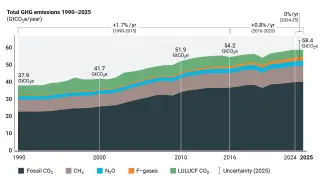
UNEP's annual emissions-gap report concludes that the world will temporarily exceed 1.5C because emissions reductions have been too slow for too long. It says the priority is now to limit how high and how long the overshoot lasts and to chart a credible route back to 1.5C by 2100. Current national pledges fall well short of the cuts needed, though the report argues faster action remains possible.
UNEP’s report, subtitled “The point of return,” sketches a least-overshoot route in which warming peaks near 1.7–1.8C around mid-century before declining. That path would require emissions cuts of 18% by 2030 and 45% by 2035, alongside expanded CO2 removal.
Current national pledges would deliver only 5–8% cuts by 2030 and 11–15% by 2035 versus 2025. Global emissions in 2025 were 58.4 GtCO2e, close to 2024, though provisional data leave the trend uncertain; annual growth has slowed from 1.7% over 1990–2015 to 0.8% since 2016.
The finding could sharpen public and business attention on adaptation as well as mitigation, since a temporary overshoot may raise risks for communities facing heat, drought, flooding or coastal exposure. Governments and investors may reassess infrastructure, food and health planning, while vulnerable households could bear the greatest strain if adaptation funding lags. It may also affect how companies and cities set long-term climate targets, though the report’s emphasis on feasible faster action could sustain pressure for stronger implementation.