Gas costs, not net-zero, account for most UK household energy bill increase, analysis finds
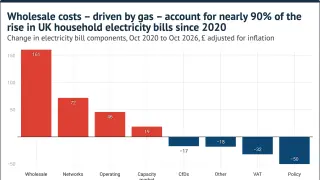
New analysis shared with Carbon Brief by the thinktank Nesta finds that expensive wholesale gas is responsible for nearly 90% of the rise in UK household electricity bills since 2020 and 77% of the increase in gas bills. The findings contradict claims that the UK’s net-zero target is driving high energy costs, with Nesta saying net-zero is helping shield Britain from expensive gas. Wholesale gas prices have reached their highest level since 2022 amid Middle East conflict, while renewable contracts for difference are reducing electricity bills under the current price cap.
Research supplied to Carbon Brief by Nesta attributes roughly nine-tenths of the increase in household power costs since 2020 to wholesale gas expenses, and more than three-quarters of the rise in domestic gas bills to the same factor. The findings challenge claims that Britain’s climate goals are pushing bills up; Nesta’s Andrew Sissons argues the net-zero framework is actually cushioning consumers from costly gas.
Wholesale gas prices have climbed to their highest point since 2022 as Middle East conflict persists. Under the current price cap, renewable contracts for difference lower electricity bills by £17, while policy-cost shifts and network investment also shape the total, according to the analysis.
Households, particularly those on lower incomes or with gas heating, could remain exposed to volatile bills if wholesale gas costs stay elevated. The analysis may shift public debate by challenging claims that climate policy is the main cost driver, potentially affecting trust in net-zero measures and the political pressure around energy support. It may also influence how policymakers weigh gas dependence against renewable investment, though the actual impact depends on future prices and policy decisions.