Education Department Denies It Is Barring Certain College Majors From Federal Aid
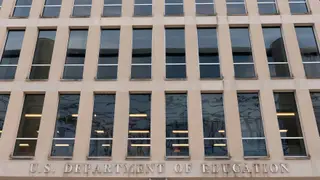
The Education Department pushed back on reports that it plans to prohibit students from choosing particular majors, saying federal officials do not set college curricula. A framework finalized in July would evaluate programs by comparing graduates' earnings with those of similar-age workers without degrees, and officials say the goal is institutional accountability. The policy debate comes as the $1.7 trillion federal student loan portfolio faces rising default and delinquency rates.
The July framework measures undergraduate programs by median graduate earnings four years after completion against similar-age workers whose highest credential is a high school diploma; graduate programs are compared with bachelor’s-degree holders. Department estimates cited in the article say about 3% of public and nonprofit bachelor’s and advanced programs fail this test, versus roughly one-third at for-profit institutions. Overall, 5.2% of programs could fail, involving 4.2% of federal aid recipients.
A Texas study of nearly one million public-college entrants found positive average returns across broad bachelor’s fields. Liberal arts had the smallest 15-year net gain at about $35,400, followed by parks/recreation/fitness at $42,400, social sciences at $51,300 and communications at $70,400; engineering and architecture exceeded $200,000.
The framework could affect students in programs with lower earnings outcomes, especially at for-profit institutions and in fields such as social work, art, music, religious studies, teaching assistance and cosmetology, if aid access changes. Institutions may face pressure to improve completion and employment results or risk enrollment and revenue losses. Borrowers could benefit from clearer outcome data, though lower-earning graduates may face added uncertainty about financing degrees that still produce positive average returns.