State Legislative Races Deserve More Attention in Midterms
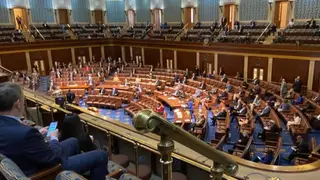
The article argues that while national attention focuses on House and Senate control, state legislative and executive races after the Nov. 3 midterms will significantly affect policy areas such as taxes, education and data centers. It reviews recent midterms—2010, 2018 and 2022—to show that down-ballot outcomes can vary widely and reshape redistricting and state governance. The author plans to watch those state-level results closely.
In 2010, Democrats lost 702 state legislative seats, the largest major-party loss since Republicans dropped 890 in 1922. Republicans also won 20 chambers and six governorships. Before that election, Democratic trifectas covered 131 House seats and Republican trifectas 66; afterward, Republican trifectas covered 198 and Democratic ones 115.
By 2018, Republicans held 4,134 legislative seats, 67 chambers, and 17 supermajorities; Democrats held 3,123 seats, 32 chambers, and four supermajorities. Democrats then gained six chambers and 308 seats, while Republicans lost 294 seats, but Democrats did not recover all 2010 losses.
State-level results could affect residents’ daily lives through tax rules, school policy, and data-center siting, while redistricting may shape voters’ representation for years. Businesses and local governments may also face different regulatory and infrastructure decisions depending on which party controls legislatures and governorships. Because these offices often receive less national scrutiny, voters may have less information about races that can still have broad consequences.