Europe's mainstream politics struggles with public frustration
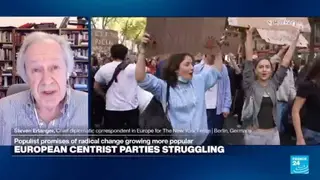
A New York Times correspondent based in Berlin said Europe's political center is facing a crisis that goes beyond election results. He cited economic frustration, inequality between generations and fading trust in established leaders in countries such as France, Germany, Italy and Spain. He said promises of stronger growth have not been kept, leaving a sense of discontent and drift.
A Berlin-based New York Times diplomatic correspondent described the political center in several European countries as under strain. He pointed to France, Germany, Italy and Spain as examples where economic disappointment, gaps between generations and weakening trust in mainstream leaders are visible.
The interview also linked these pressures to a broader mood of disillusionment and uncertainty. It framed the problem as more than shifting election outcomes, emphasizing unmet expectations for stronger growth and a widespread feeling of dissatisfaction and drift.
This could affect voters across generations, especially those who feel economically squeezed or politically unheard. If trust in established parties and leaders continues to weaken, public debate may become more fragmented, and mainstream institutions could face greater pressure to demonstrate tangible results. Younger and older citizens may experience the consequences differently, with economic opportunity and public confidence likely central concerns.