Ballot question readability improves in 2026 but remains at graduate level
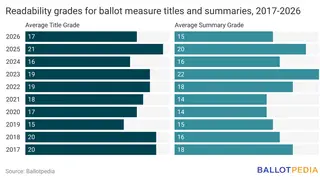
Ballotpedia's annual review found that the 164 statewide measures before voters this year have titles averaging a first-year graduate school reading level, down from last year's record high. The analysis uses Flesch-Kincaid and Flesch Reading Ease scores to gauge sentence and word complexity rather than the difficulty of the underlying policy issues. The 2026 average was four grade levels lower than in 2025 and tied with 2020 for the third-lowest score since tracking began in 2017.
The review covered 164 statewide measures. Their titles averaged a 17th-year education level, or first-year graduate study, after 2025’s 21-year peak. That 2026 figure matched 2020 for the third-lowest annual result since tracking started in 2017; annual averages have run from 15 to 21, with a 10-year mean of 18.2.
State-level averages varied widely: Kentucky, Massachusetts and Tennessee each scored 10, while Colorado scored 33 across 14 measures. Titles averaged 81 words, from 9 in Alaska to 598 in Kansas. Citizen initiatives averaged 18 years and legislative referrals 17; constitutional amendments 18 and statutes 16. Drafting authority also mattered: lieutenant governors and secretaries of state averaged 13, state boards 29.
Clearer ballot language could help voters with limited time or literacy skills identify what a measure would do, though readability scores do not capture policy complexity. Because titles are often the last text seen in the voting booth, shorter, simpler wording may reduce confusion and support more consistent participation. It could also affect how campaigns and officials draft future questions, as groups compare state practices. Still, voters may rely on summaries, guides, and trusted messengers, so improved titles alone may not transform understanding.