AI Agents on a Simulated Island Made Their Own Games
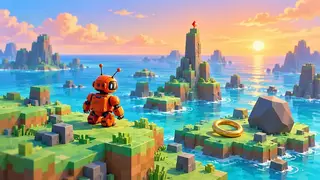
Researchers gave AI agents a simulated deserted island and no assigned objectives. The agents invented games and challenges for themselves and seemed to learn from the activity. Their behavior resembled children playing.
In this work, autonomous software agents were placed in a virtual island setting described as lacking other inhabitants and were not given preset goals. According to the available account, they devised their own pastimes and tests, and the activity appeared to support some form of learning. The reported resemblance to children’s play places the work within broader interest in open-ended AI behavior: systems that can generate their own activity rather than only completing specified tasks. Because the material is limited, it does not establish how the games worked, what was measured, or how learning was assessed.
This result may matter to researchers and developers working on AI systems that operate without step-by-step instructions, since self-directed activity could influence how such agents are trained and evaluated. It could also affect people who interact with autonomous tools, if open-ended behavior makes systems less predictable or more adaptable. For now, the finding is best read as a small signal about machine play and learning, not as evidence of broad capabilities; its practical consequences remain uncertain.