Space Force moves to speed development of moon-region military systems
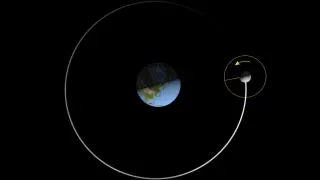
The Space Force is preparing two requests for information aimed at finding commercially available technology for missions in the space between Earth and the Moon, including AI software for autonomous spacecraft operations. Maj. Gen. Stephen Purdy said the service wants to field these capabilities by the end of fiscal 2029 and pointed to China's progress as a reason for urgency. Senior Pentagon officials have increasingly characterized that region as a potential combat domain.
Maj. Gen. Stephen Purdy, the Space Force’s advanced-programs acquisition executive, is preparing two market inquiries. One would look for commercial hardware and spacecraft suitable for operations in the volume from Earth orbit out to the Moon; the other would seek AI tools enabling autonomous spacecraft activity there. The service’s target is to put such capabilities in place by the close of fiscal 2029.
Purdy attributed the accelerated timetable to Chinese activity. A September People’s Daily report described 30 small satellites placed near an Earth-Moon Lagrange point and in lunar orbit; Beijing has called the effort scientific, while outside experts cited by Breaking Defense saw a surveillance purpose. AFRL, SpaceWERX and DARPA have run related experiments.
The push could draw more companies into lunar-region communications, navigation, and autonomous software markets, affecting contractors, investors, and technical workers. It may also increase public attention to military activity beyond Earth orbit and to how commercial data and AI are used in national security. Because timelines and budgets remain uncertain, effects on taxpayers, civil space programs, and international norms may depend on how the two inquiries translate into contracts.