Most State Legislative Chambers Face Voters in November
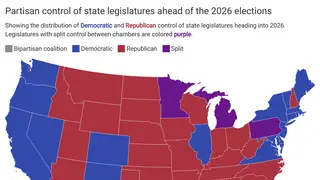
On Nov. 3, voters in 46 states will decide races for 88 of the 99 state legislative chambers, covering 6,139 of 7,386 seats. Republicans currently hold majorities in 51 of the chambers holding elections, Democrats hold 34, and Alaska’s two chambers use power-sharing while Minnesota’s House is evenly divided. Ballotpedia identified 18 chambers as battlegrounds this year.
The contests cover 6,139 seats out of 7,386 nationwide, with 46 states holding legislative elections. Among the 88 chambers in play, Republicans currently lead 51, Democrats lead 34, Alaska’s two bodies rely on power-sharing, and Minnesota’s House is tied.
Ballotpedia lists 18 chambers as battlegrounds: Republicans hold 10, Democrats five, and three are tied or power-sharing. Across all 99 chambers, Republicans control 57 and Democrats 39; three are split or shared. Republicans also hold 4,061 seats overall, Democrats 3,238, with 28 third-party or independent and 59 vacant.
These elections could reshape state policymaking on budgets, education, health, and voting rules, affecting residents who rely on state services. Outcomes may influence how easily governors enact agendas or override vetoes, and close chamber control could amplify the role of small numbers of swing districts. Candidates, parties, and advocacy groups may adjust strategies, while voters in battleground states could see heightened attention and spending.