Simulations expose overlooked energy loss in quantum crystal defects
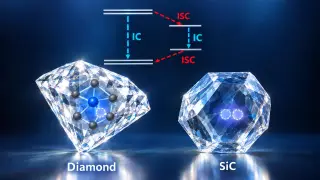
University of Chicago researchers developed a computational approach to model how light interacts with spin defects in materials such as silicon carbide. The simulations revealed that internal conversion, an energy-loss process, plays a larger role than previously assumed. Better understanding of these defects could aid quantum sensors, quantum computing, and energy-related materials.
A University of Chicago team led by Giulia Galli created a simulation framework for spin defects in materials including diamond and silicon carbide. It follows the complete light-driven cycle, from excitation to relaxation, and includes internal conversion, where energy is transferred into atomic vibrations. The work appeared in Physical Review Letters.
Stefano Villani was first author, with Yu Jin, formerly in Galli’s group and now at the Flatiron Institute. Modeling internal conversion is difficult because it requires tracking electron interactions with surrounding atoms in realistic solids containing hundreds or thousands of atoms; the team combined methods developed over years.
The findings could matter to researchers and engineers developing quantum sensors, quantum computers, and energy-related materials. More reliable simulations may help them anticipate how defects lose energy and guide material choices before costly experiments. Benefits would likely emerge gradually, through improved design tools rather than immediate consumer products, and may extend to industries exploring renewable energy conversion or storage.