Swiss glacier loss accelerates with record melt and vanished icefields
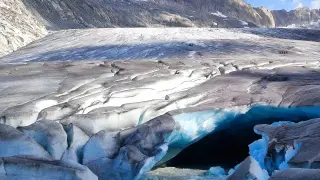
Switzerland’s glaciers lost more than 5% of their total ice volume in 2026, with average thinning of 2.5 to 4 meters and up to 10 meters in some lower areas. The Rhône, Aletsch, and Clariden glaciers had their worst melting on record, while Bella Tola and Griessfirn disappeared entirely. Nearly 20% of the country’s glacier ice has been lost over five years, driven by low snowfall and prolonged summer heat.
The annual assessment comes from SCNAT and draws on GLAMOS observations coordinated at ETH Zurich, Fribourg, and Zurich. Snow cover before summer was unusually sparse: the 2025–26 winter fell within Switzerland’s ten lowest-snowfall winters in the record.
From May through September, sustained warmth and dryness sped losses even high up. Temperatures reached the freezing point above 4,000 meters on 76 dates, more than double the typical count and a national high; by September, bare ice showed at 3,500 meters where snow usually lingers.
As the ice buffer shrinks, Swiss water managers could face greater strain in hot, dry summers, when meltwater currently helps offset shortages. Households, farmers, and other water users may see less reliable late-summer supply, while mountain communities and tourism may need to adapt as familiar glaciers and icefields vanish. These are potential consequences, not certain outcomes, and the scale will depend on future melt and precipitation.