Hormone-Disrupting Chemicals Leave Molecular Marks in Breast Tissue Models
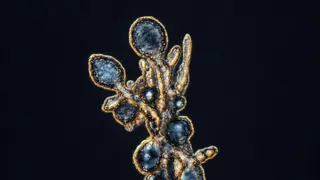
Experiments with human breast tissue models indicate that mixtures of hormone-disrupting chemicals can produce molecular changes that might someday help flag elevated breast cancer risk. People are commonly exposed to multiple such chemicals at once, and their role in disease remains under investigation. The work points to a possible biological signature of exposure rather than proving cause.
The report focuses on laboratory models of human breast tissue rather than on people, describing molecular shifts associated with combined contact to several hormone-disrupting substances. Since real-world exposure often involves more than one such chemical, testing mixtures reflects a common pattern. The results are presented as a possible indicator of contact, not as proof that these chemicals cause cancer; the disease connection remains an open research question.
This work could matter to people concerned about everyday chemical exposures and to researchers seeking earlier risk signals, but it may also invite overinterpretation. A molecular signature found in tissue models might eventually support screening or prevention research; for now, it cannot tell individuals their own cancer risk. Public health communication may need to balance caution with clarity, since uncertainty about mixtures and disease remains substantial.