Eighty years since the first picture of Earth taken from above the atmosphere
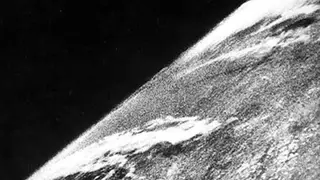
On October 24, 1946, a V-2 rocket launched from New Mexico carried a 35-mm movie camera to about 65 miles above Earth. The camera was destroyed when it fell back, but the film survived and provided an early view of Earth from space.
The rocket climbed roughly 65 miles, past today’s 62-mile Kármán line, with a camera recording frames every 1.5 seconds. Although the impact smashed the camera, a steel cassette protected the film. Before this flight, the highest views came from a 1935 balloon at 13.7 miles, enough to hint at Earth’s curvature.
The V-2 reached more than five times that balloon altitude, revealing the planet against black space. Engineer Clyde Holliday later described the stitched frames as showing how Earth might appear to an arriving space traveler. A March 1947 V-2 flight returned another view from 101 miles, including the Gulf of California.
The surviving film may have shifted public perception by making Earth’s place in space visually concrete, influencing how scientists, engineers, and general audiences imagined exploration. It could have encouraged later photographic and remote-sensing efforts, shaping education and media coverage of space. Its impact was likely gradual rather than immediate, but the image may have helped normalize the idea that humans could observe their world from outside its atmosphere.