France assesses unrest as curfews take hold
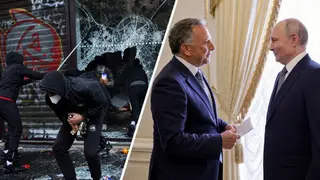
This weekly programme examines the violent unrest that followed mass protests across France, including shop looting and attacks on public buildings, and the curfews imposed afterward. President Emmanuel Macron pointed to radical and criminal groups while admitting failures in intelligence and preparation, as Marine Le Pen criticised his leadership. The episode also discusses US-Russia talks and Israel.
After widespread protests in France, violent episodes included store looting and damage to public buildings, among them Lyon’s tourist office and Limoges city hall. Curfews followed. President Macron attributed the disorder to radical and criminal elements while acknowledging shortcomings in intelligence and preparation; Marine Le Pen attacked his leadership. Similar demonstrations occurred in Milan, Spain, Portugal and Belgium.
The programme also covered Washington-Moscow contacts, including the release of US teacher Stephen Hubbard after four years and a US envoy’s praise for Vladimir Putin, alongside lifted sanctions on Russian diesel and possible renewed trilateral talks. It further noted Israel’s election campaign, with Trump endorsing Benjamin Netanyahu.
Curfews and damage to shops and public buildings could disrupt daily life for residents, workers and small businesses, while straining local services and heightening public anxiety. The debate over security and intelligence failures may affect trust in institutions and influence electoral sentiment, particularly given Marine Le Pen’s stronger polling. Unrest elsewhere in Europe may prompt wider scrutiny of how governments balance protest, public safety and civil liberties.