Odd Radio Loop Traces Ancient Black Hole Activity in Hidden Galaxy Cluster
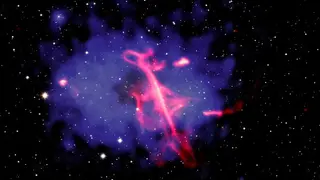
Astronomers have identified a radio source nicknamed for its musical-note appearance as the remnant of an old outburst from a supermassive black hole. Observations with multiple radio and X-ray telescopes show that the emission comes from a large galaxy cluster located about 1.5 billion light-years away and obscured by the Milky Way’s disk. The team thinks a cluster collision re-energized faded plasma, producing the object’s filamentary structure and steep radio spectrum.
Cataloged as VLSS J0318.9+5755, the Treble Clef was found during a LOFAR survey by Andrea Botteon’s INAF team. Earlier observations from the 1960s onward had recorded it, and its position near the Milky Way’s plane once raised pulsar suspicions. A 2004 paper suggested a cluster connection, but follow-up was lacking until this study.
New GMRT, LOFAR, Chandra and eROSITA data confirmed a massive cluster behind the source, about 1.5 billion light-years away. The radio structure spans roughly 2.5 million light-years, with thin filaments and a steep spectrum. Researchers estimate the revived plasma is 190–200 million years old; they propose central black hole jets first created it, then a cluster collision compressed or re-energized it, perhaps with shock waves.
This result may mainly affect astronomers, science communicators, and curious publics by offering a clearer example of how galaxy clusters and black holes evolve. It could enrich educational explanations of invisible cosmic processes and highlight multi-telescope collaboration. Its practical societal effects are likely indirect, though improved understanding of plasma and magnetic fields might someday inform related technologies; any such benefits remain speculative.