Swift Observatory Concludes Science Mission After Years of Cosmic Discoveries
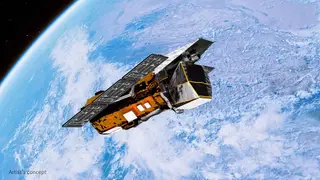
NASA's Neil Gehrels Swift Observatory has finished its science mission because atmospheric drag at an orbit below 171 miles prevents its telescopes from holding steady on targets. Its last observation came on Oct. 20, and the satellite is expected to re-enter the atmosphere within weeks. Over its long run, Swift studied thousands of gamma-ray bursts and supernovae, contributed to about 7,000 papers, and left an archive that NASA expects to support future discoveries.
Swift launched in November 2004 and began observations the next month; NASA renamed it in 2018 to honor its first principal investigator, Neil Gehrels, after his death. Though planned to operate for only two years, it stayed productive for more than ten times as long.
Its rapid targeting allowed it to catch short gamma-ray bursts, including a May 2005 event lasting 0.03 seconds. Detecting 11 X-ray photons from its afterglow supported models in which such bursts arise from merging neutron stars.
Swift’s retirement may affect astronomers who depend on fast follow-up of fleeting cosmic events, while its archive could continue to support researchers, students, and educators for years. NASA’s stated exploration of other rapid-response options may shape how the wider astrophysics community coordinates future observations. The public may see fewer immediate alerts tied to Swift, but long-term educational and scientific value could persist through its archive and published results.