Soldier Ants Challenge Standard Body-Scaling Expectations
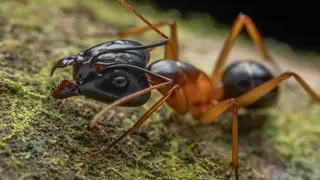
New research indicates that some ants do not follow the usual pattern in which larger animals have proportionally larger body parts. Soldier ants with very large heads and strong jaws can have other body features that are smaller than expected. This finding challenges a broad assumption about how body size and anatomy are linked in biology.
The report examines soldier ants, which are noted for unusually large heads and powerful jaws. It says some of these ants have other body parts that are smaller than expected under a common biological rule linking overall body size to proportionally larger anatomy.
That pattern matters because scientists often use broad scaling expectations to compare how traits change with size. The finding suggests such rules may not fit every specialized animal, so body-size relationships may need closer examination.
The result may affect how researchers, educators, and science communicators discuss body-size rules. It could encourage more cautious examples in classrooms and museums, and it may interest students comparing anatomy across species. For the public, the story could illustrate that biological patterns are often more variable than simple rules suggest, though its practical consequences are likely limited.