Upcoming Webinar Explores How Midterm Results Could Shape Healthcare Policy
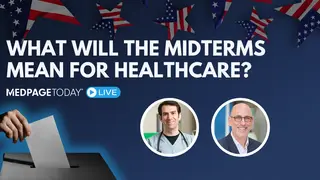
MedPage Today is hosting a live webinar on November 2 featuring KFF’s Larry Levitt to analyze how midterm election outcomes may impact healthcare issues such as affordability, Medicare, abortion access, and vaccine policy. The event will draw on polling showing that healthcare costs remain a top concern for voters.
On November 2, 2026, MedPage Today will host a live webinar featuring Larry Levitt, executive vice president for health policy at KFF, to analyze how the upcoming midterm elections may influence key healthcare issues such as affordability, Medicare, abortion access, and vaccine policy. The event, scheduled for 3 p.m. ET, will draw on recent KFF polling indicating that 47% of voters consider healthcare costs “extremely important,” placing it alongside gasoline and transportation expenses as top economic concerns. The discussion will be moderated by Jeremy Faust, MD, editor-in-chief of MedPage Today, and will include a live Q&A session for registered attendees. Registration is open to the public, with recordings available for those unable to attend live.
The webinar emerges from a political landscape where healthcare remains a central issue despite shifting national priorities. Earlier reporting referenced in the article—such as “Can the Midterms Save Vaccines? Don’t Count on It” and “Abortion Is on the Ballot Again”—suggests that health policy has become increasingly entangled with partisan debates, particularly around reproductive rights and public health infrastructure. KFF, known for its nonpartisan research, aims to provide data-driven insights into how electoral outcomes could affect federal and state-level healthcare decisions. Meanwhile, organizations like MedPage Today are positioning themselves as platforms for timely, expert analysis during pivotal political moments
The webinar could shape public understanding of how midterm outcomes might affect healthcare access and affordability, particularly among vulnerable populations who depend on Medicare, Medicaid, or subsidized insurance. If voter concerns about rising health costs persist, candidates may be pressured to propose more aggressive cost-control measures—though legislative success depends on broader political alignment. The event may also highlight growing public interest in reproductive rights and vaccine mandates, issues that have become increasingly polarized since the post-Roe era and the pandemic’s aftermath. Comparable to the 2018 midterms, when healthcare emerged as a dominant theme following the failed repeal of the Affordable Care Act, this moment may signal renewed momentum for policy change. However, unlike 2018, current polling suggests that healthcare is now a top-tier concern across party lines, which could either drive consensus or deepen gridlock if no clear path forward emer