Fossil Evidence Suggests Early Hominins Practiced Cannibalism Over a Million Years Ago
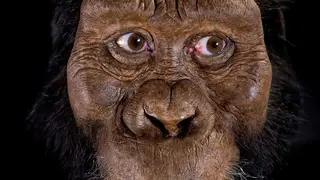
A 1.45-million-year-old shin bone from northern Kenya shows cut marks consistent with stone tool use, indicating that ancient human relatives may have butchered and consumed members of their own species. The findings, based on 3D analysis of experimental comparisons, represent some of the oldest evidence of hominin cannibalism. Whether the meat was eaten remains uncertain.
A 1.45-million-year-old shin bone (KNM-ER 741), discovered in northern Kenya by Mary Leakey in 1970 and preserved at the National Museums of Kenya, bears nine cut marks consistent with stone tool use, suggesting early hominins may have butchered and consumed members of their own species. The fossil, initially classified as *Australopithecus boisei* or later *Homo erectus*, remains unassigned to a definitive species due to insufficient morphological data. Analysis by paleoanthropologist Briana Pobiner of the Smithsonian’s National Museum of Natural History, along with Michael Pante and Trevor Keevil, employed 3D scans of experimental marks—comparing them against a database of 898 known marks—to determine that nine of the eleven marks were made by stone tools, while two resembled bite marks likely from a large cat, possibly a saber-tooth. The cut marks’ uniform orientation and placement on the tibia, where calf muscle would have been attached, suggest deliberate flesh removal, resembling patterns seen in animal butchery rather than ritual or trauma. This evidence represents some of the oldest compelling signs of hominin cannibalism, though it remains uncertain whether the meat was consumed or if the act was part of a broader behavioral pattern such as scavenging or intergroup conflict. The study, published in June 2023, has sparked debate among archaeologists who caution that tool marks alone do not confirm consumption, and the identity of both victim and perpetrator remains un
The discovery could reshape public understanding of early human evolution by challenging the narrative of gradual moral progress, suggesting that behaviors once considered uniquely modern—such as cannibalism—may have deep roots in our lineage. This may influence how educators present human origins, potentially prompting more nuanced discussions about violence and survival in prehistoric societies. For museums and science communicators, the story offers a compelling case study in interpreting ambiguous fossil evidence, highlighting the risks of overinterpretation while underscoring the importance of rigorous methodology. Comparable cases, such as the controversial 1980s findings at Gough’s Cave in England—where Neanderthal remains showed signs of ritualistic dismemberment—demonstrate how such discoveries can shift scholarly consensus and public perception over time. The current case may similarly prompt re-evaluation of other fossil sites with cut marks, especially those previously attr