Ancient Alaskan Rocks Reveal Early Oxygen Decline Preceding Triassic Extinction
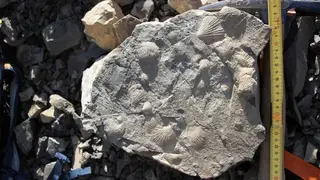
New research using sedimentary rocks from Alaska shows that ocean oxygen levels began declining about 8 million years before the end-Triassic mass extinction. This prolonged deoxygenation, combined with rising acidity, created hostile conditions for marine life long before the final extinction event. The findings suggest environmental collapse was gradual, not sudden.
New research led by Virginia Tech geologists, including first author Kayla McCabe, reveals that ocean oxygen levels began declining approximately 8 million years before the end-Triassic mass extinction, which occurred 201 million years ago. The study focuses on sedimentary rock layers collected from Grotto Creek in Alaska’s Wrangell–St. Elias National Park—remote and accessible only by small aircraft—where fieldwork was conducted in 2017, 2019, and 2022. Geochemical analysis of these layers shows a prolonged deoxygenation trend in shallow marine environments, with conditions worsening significantly during the extinction event itself. The findings indicate that marine ecosystems were under long-term stress due to declining oxygen and rising acidity—conditions linked to increased volcanic activity and global warming—long before the final die-off. While massive volcanic eruptions associated with the breakup of Pangaea are known to have contributed to the extinction, this study suggests environmental degradation began earlier than previously recognized, raising questions about what triggered the initial decline. The team points to another volcanic province active during that time but acknowledges the cause remains uncertain.
The research was supported by the National Science Foundation, National Geographic Society, Alaska Geological Society, and Virginia Tech’s Department of Geosciences and College of Science Dean’s Discovery Fund. These institutions aim to advance understandi
This study could shape how policymakers and conservationists view current ocean deoxygenation trends, particularly in coastal zones like the Chesapeake Bay, where dead zones are growing due to warming and nutrient runoff. By showing that environmental collapse can unfold over millions of years rather than abruptly, it underscores the long-term risks of climate change even if immediate extinction events are avoided. The findings may influence marine protection strategies, emphasizing early intervention before ecosystems reach critical thresholds. Comparable to the 19th-century recognition of deforestation’s long-term impacts, this research may prompt a shift from reactive to anticipatory environmental management. Institutions like NOAA and international climate panels could use such paleo-data to refine predictive models. What to watch for next is whether similar deoxygenation patterns are found in other ancient basins, which could strengthen the case for global monitoring systems. The