Freshwater and stone availability determined early human settlement patterns in Arabian deserts
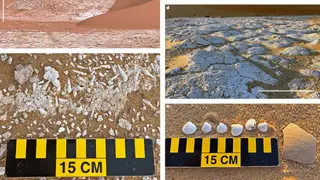
A new study reveals that early humans in the Rub' al Khali desert of Arabia only settled where both fresh water and usable stone were available. Despite abundant water sources, no archaeological traces exist in areas lacking stone tools or raw materials. Researchers from the University of Vienna and the University of the Algarve traveled 1,500 kilometers across the region to analyze settlement patterns, concluding that access to both resources was essential for human habitation.
A new study has uncovered that early human settlements in the Rub' al Khali desert of Arabia were contingent upon the coexistence of fresh water and accessible stone resources. Despite the presence of water sources across the region, archaeological evidence is absent in areas where usable stone tools or raw materials are lacking. Researchers from the University of Vienna and the University of the Algarve conducted fieldwork spanning 1,500 kilometers to map settlement patterns, revealing that human habitation was not solely determined by water availability but required a dual resource base. The findings indicate that early humans could not sustain communities without both essential materials—water for survival and stone for toolmaking, which were critical for hunting, food preparation, and shelter construction.
The study builds on prior research into human migration patterns across arid regions, particularly in the context of the Arabian Peninsula’s shifting climate over the past several hundred thousand years. Earlier reports have documented episodic wet periods that allowed temporary habitation, but this research adds a crucial layer: even during these favorable climatic windows, settlement was restricted by material constraints. The absence of stone tools in otherwise water-rich zones underscores that human movement and adaptation were not just about finding water but also about securing the physical means to survive.
The researchers involved—affiliated with the Unive
This discovery could reshape how archaeologists approach the study of human adaptation in extreme environments, emphasizing that survival in arid regions depended on a balanced access to multiple resources rather than just water. It may influence conservation policies in the Arabian Peninsula by highlighting the importance of preserving both geological and hydrological features as part of cultural heritage. Institutions managing archaeological sites or development projects in desert regions may now consider stone availability as a critical factor in site selection and preservation planning. A comparable case is the interpretation of Neanderthal habitation patterns in Europe, where researchers initially focused on climate but later recognized that tool material access shaped settlement choices. This study may prompt similar reevaluations in other ancient migration narratives. What to watch for next is whether similar dual-resource models emerge in studies of Saharan or Australian des