Spiders May Experience Dream-Like Sleep, Study Reveals
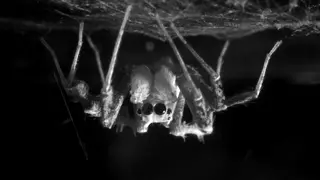
Researchers at the University of Bonn have identified two distinct sleep stages in Australian jumping spiders, including behaviors resembling REM sleep such as eye movement and muscle twitching. This discovery suggests that spiders may share more with human sleep patterns than previously thought. The findings open new questions about consciousness and sleep evolution across species.
Researchers at the University of Bonn have discovered evidence of two distinct sleep stages in Australian jumping spiders, a finding that challenges long-held assumptions about the evolution and universality of sleep patterns across species. The study observed behaviors such as eye movement and muscle twitching during certain phases of rest, which closely resemble the rapid eye movement (REM) sleep seen in humans and other mammals. While the exact duration or frequency of these stages was not specified, the presence of such physiological markers in a creature with a vastly different nervous system suggests that sleep may have deeper evolutionary roots than previously believed. The spiders studied are known for their complex visual processing and hunting strategies, making the discovery particularly intriguing given their advanced sensory capabilities.
This research builds on prior work suggesting that sleep-like states exist in invertebrates, but it is among the first to identify structured sleep stages with REM-like features in arachnids. Earlier studies had noted rest periods in insects and other small animals, but without clear behavioral or neurological parallels to mammalian sleep. The University of Bonn team’s findings open new avenues for exploring whether consciousness or memory consolidation—processes linked to REM sleep in humans—may also occur in species with much simpler brains. The implications extend beyond biology: if such sleep stages are present in creatures
The discovery could influence how society perceives animal cognition, particularly in invertebrates long considered too simple to experience complex internal states. If spiders exhibit dream-like sleep, it may prompt reconsideration of ethical standards for insect treatment in research, agriculture, and pest control. While direct policy changes are not imminent, the findings may fuel public debate about sentience and moral consideration for non-mammalian species. In scientific circles, this could shift funding priorities toward studying neural activity in small-brained organisms, potentially expanding neuroscience beyond vertebrate models. A comparable precedent is the 2016 study on fruit flies showing sleep-like behavior with memory consolidation functions, which similarly challenged assumptions about consciousness in insects. That case eventually led to broader discussions about animal welfare and experimental ethics. Similarly, this spider research may not immediately alter laws or