House Republicans Prevent Impeachment Vote Against Defense Secretary Pete Hegseth Amid Political Tensions
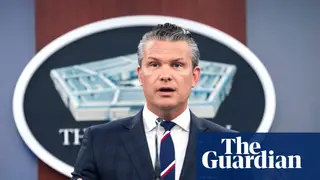
House Republicans blocked a resolution to impeach Defense Secretary Pete Hegseth, rejecting allegations of constitutional violations related to military actions in Iran, Venezuela, and Yemen. The vote followed a significant midterm election loss for the GOP and highlighted ongoing loyalty to former President Donald Trump, who supported Hegseth. The move was celebrated by Trump as an exoneration, while the Pentagon hailed it as a victory for national defense.
On Tuesday, 10 November 2026, the U.S. House of Representatives voted 211–204 to block a resolution calling for the impeachment of Defense Secretary Pete Hegseth, rejecting allegations that he violated the Constitution through military actions in Iran, Venezuela, and Yemen. The motion, introduced by Republican Congressman Thomas Massie in September, cited eight specific constitutional breaches, including launching attacks without congressional approval—such as a strike on a school in Minab, Iran, that killed over 168 people—and conducting extrajudicial killings of at least 221 individuals in the Caribbean and eastern Pacific. The resolution also accused Hegseth of retaliating against Democratic Senator Mark Kelly for criticizing his policies and orchestrating the capture of Venezuela’s former president, Nicolás Maduro, and a bombing campaign in Yemen. Despite bipartisan support from top Democrats, Republicans moved to kill the resolution by referring it to the Judiciary Committee, where it was effectively stalled. This vote occurred just days after Republicans lost control of both chambers in their worst midterm election in over 50 years, underscoring deep loyalty to former President Donald Trump, who publicly endorsed Hegseth and hailed the outcome as an “EXONERATION.” The Pentagon celebrated the result as a “total victory,” while Hegseth dismissed the impeachment push as a “farce” during a defiant press conference at the Pentagon.
The broader context includes growing internal Republican divisions over foreign policy, particularly regarding the prolonged Iran conflict, which has contributed to rising oil prices and political fallout. Some Republicans, like Warren Davidson, acknowledged the war’s unpopularity but rejected blaming Hegseth, arguing it was Congress and Trump who enabled the conflict. Hegseth, a former Fox News host and Army National Guard officer, has been known for his aggressive leadership style—firing top generals, blocking promotions of women and minorities, and driving many journalists out of the Pentagon. His tenure has coincided with one of the most politically contentious periods in U.S. military history. With Democrats now poised to take control of the House in January under incoming Speaker Hakeem Jeffries, who supports impeachment, further action remains possible. It is unclear whether the Senate, where Republicans hold a 53-seat majority, would even consider an impeachment trial, or if Republican leader John Thune would allow it.
The outcome of this vote may deepen public skepticism toward military accountability and congressional oversight, particularly as defense decisions increasingly appear to be driven by political loyalty rather than constitutional checks. The fact that a high-ranking official faced allegations involving mass civilian casualties yet was shielded by party discipline could erode trust in democratic institutions, especially among voters concerned about war powers and transparency. The Pentagon’s celebration of the result as a “victory” may further entrench a culture of insularity within the military establishment, potentially undermining civilian control over the armed forces—a cornerstone of U.S. democracy. Comparable to the Watergate-era impeachment debates, this episode reflects how political allegiance can override legal scrutiny, though unlike past cases, there is no clear evidence of criminal conduct—only allegations of constitutional overreach. The situation could prompt renewed debate on reforming war powers legislation or strengthening oversight mechanisms within defense agencies. What remains uncertain is whether future Democratic leadership will pursue impeachment through formal hearings or leverage other tools like subpoenas and investigative reports. The next phase may involve increased scrutiny from watchdog groups, media investigations, and potential legal challenges—especially if the Iran conflict escalates or civilian casualties continue to mount.