Raúl Esparza Takes on Galileo in New Broadway Musical Premiering This Week
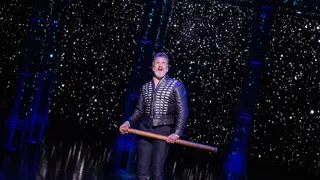
Tony nominee Raúl Esparza stars as Galileo Galilei in the new musical Galileo, which began previews on November 10, 2026, at the Shubert Theatre. Directed by Tony Award winner Michael Mayer, the production marks a major theatrical event with its historical and scientific themes. The show is set to officially open on December 6, 2026.
Raúl Esparza stars in the new Broadway musical *Galileo*, which began previews on November 10, 2026, at New York’s Shubert Theatre, with an official opening set for December 6, 2026. The production is directed by Michael Mayer, a Tony Award winner known for his work on *American Idiot* and *Spring Awakening*, bringing his distinctive theatrical vision to a story centered on the life of astronomer Galileo Galilei. The musical explores themes of scientific discovery, institutional conflict, and personal conviction, using music and drama to dramatize one of history’s most pivotal clashes between science and authority. Esparza, a Tony nominee recognized for his performances in *Company* and *The Music Man*, takes on the lead role, marking a significant return to Broadway in a role that blends intellectual gravitas with emotional depth.
The production’s development reflects a growing trend in Broadway to revisit historical figures through contemporary artistic lenses, particularly those whose ideas challenged established power structures. While no prior reporting is cited directly in the article, the choice of Galileo—a figure long associated with the conflict between science and religion—suggests an intentional thematic resonance with current debates over truth, evidence, and institutional resistance to new knowledge. The involvement of Michael Mayer, a director with a track record of blending music and narrative to address complex social issues, signals a creative ambition beyond spectacle. The Shubert Theatre, one of Broadway’s most iconic venues, provides a prestigious stage for the production, underscoring its significance in the 2026 season.
What remains unresolved is the critical reception of the musical upon opening, the extent of its commercial success, and how it will be perceived in relation to other recent science-themed works on stage. The show’s impact may also depend on audience engagement with its historical and philosophical underpinnings, which could influence broader conversations about science communication and education.
The musical *Galileo* could contribute to a renewed public interest in scientific history and the ethical dimensions of discovery, particularly among theatergoers who might not otherwise engage with such topics. By dramatizing Galileo’s struggles with the Catholic Church, the production may spark reflection on modern-day tensions between empirical evidence and ideological resistance—issues relevant to debates over climate change, vaccination, and misinformation. The show may also influence how educational institutions frame science history, potentially inspiring classroom discussions or supplementary programming. This approach echoes earlier successful Broadway productions like *The Producers* or *Hamilton*, which used theatrical storytelling to reframe historical narratives for contemporary audiences. However, unlike those works, *Galileo* centers on a figure whose legacy is deeply tied to intellectual conflict rather than political revolution, making its cultural impact more subtle but potentially enduring in academic and artistic circles. What to watch for next is whether the musical develops into a touring production or inspires educational partnerships with science museums or universities. Its success may also signal a broader appetite for intellectually ambitious theater on Broadway, possibly encouraging other creators to explore similar themes.