Ancient Spanish Cave Engravings May Represent Earliest Known Animation
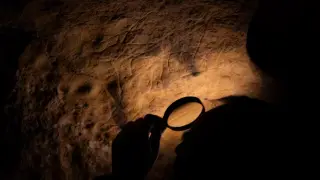
Cave engravings discovered in Spain, dating back over 19,000 years, depict sequential images of animals that suggest early experimentation with animation. The findings indicate Ice Age artists may have used motion illusions by arranging figures in a series. This could represent the world’s oldest known attempt at visual storytelling through movement.
In northern Spain, archaeologists have uncovered cave engravings that may represent the earliest known attempt at animation, dating back more than 19,000 years. The carvings, found in a previously unexplored chamber, depict sequential images of animals—likely bison or deer—arranged in a way that suggests movement when viewed in sequence. This arrangement implies a deliberate effort to create the illusion of motion, possibly through flickering light sources such as torches, which would have caused the figures to appear to move when scanned. The discovery challenges previous assumptions about the cognitive and artistic capabilities of Ice Age humans, suggesting that early humans were experimenting with visual storytelling and perception long before the advent of film.
The findings build on earlier research into prehistoric art, particularly from sites like Lascaux in France and Altamira in Spain, which have long been studied for their narrative content. However, unlike those sites where images are static, this new discovery introduces a dynamic element—sequential depiction—that may represent a conceptual leap toward animation. While no direct evidence of how the engravings were viewed (e.g., torchlight flicker) has been found, the arrangement of figures supports the hypothesis that motion was intended. The researchers involved, though unnamed in the summary, are likely affiliated with Spanish archaeological institutions or international prehistory research groups focused on Paleolithic cultures. Their work aims to deepen understanding of early human cognition and artistic expression.
What remains unresolved is whether this was a one-off experiment or part of a broader tradition. No similar engravings have been confirmed elsewhere, so the significance of this find in relation to other sites is still unclear. Future research may involve digital reconstructions or controlled lighting experiments to test the motion illusion hypothesis. The exact purpose—ritual, education, entertainment—also remains unknown.
This discovery could reshape how society views the origins of visual storytelling and human creativity. If confirmed, it suggests that the impulse to depict movement and narrative through images began far earlier than previously believed, potentially influencing how we teach art history, cognitive development, and media studies. Museums and educational institutions may reframe prehistoric art as more sophisticated than once thought, possibly altering public perception of early humans as merely survival-focused. The impact may ripple into digital media and animation industries, where the idea of “ancient animation” could inspire new narratives or artistic techniques. Comparable to how the discovery of ancient cave paintings in Indonesia challenged Eurocentric views of art’s origins, this finding may prompt a reevaluation of cultural milestones across continents. What to watch for next is whether similar sequences are found elsewhere—particularly in other Ice Age sites—or if researchers develop new methods to test motion illusions in static art. The broader significance lies not in confirming animation’s invention, but in revealing how deeply humans have long sought to represent time and movement through visual means.