Recurrent Energy Launches 20 MW UK Solar Farm; Sungrow Completes Major Battery Storage Project in 20 Days
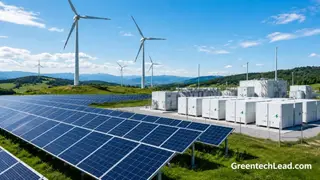
Recurrent Energy, a subsidiary of Canadian Solar, has begun commercial operations at the 20 MWp Court Barton Solar Farm in South Devon, UK, which will power about 8,500 homes and avoid over 6,200 tonnes of CO₂ annually. Sungrow and BW ESS completed the 350 MW / 1,243 MWh Hams Hall battery storage project in the UK’s West Midlands in just 20 days, using Sungrow’s PowerTitan 2.0 technology. The facility is located near National Grid’s Hams Hall substation and will support electricity demand for up to 1.3 million homes at full capacity.
Recurrent Energy, a subsidiary of Canadian Solar, has launched commercial operations at the 20 MWp Court Barton Solar Farm in South Devon, UK, marking a significant step in the nation’s renewable energy infrastructure. Located near Newton Abbot, the project began operations in November 2026 and is projected to supply electricity for roughly 8,500 homes annually while avoiding over 6,200 tonnes of CO₂ emissions each year. The site also includes a conservation initiative, dedicating about 16 acres to enhance habitat for skylarks and aiming for more than 60% biodiversity net gain—reflecting growing regulatory and investor pressure on developers to integrate ecological restoration into renewable projects. This development is part of Canadian Solar’s broader global footprint, which includes approximately 12.4 GWp of solar capacity and 6.4 GWh of battery storage already deployed, with a pipeline of 22 GWp solar and 84 GWh storage projects underway.
Simultaneously, Sungrow and BW ESS completed the Hams Hall battery storage project in just 20 days, a record pace for such infrastructure. The facility, situated near National Grid’s Hams Hall substation in the West Midlands, has a capacity of 350 MW / 1,243 MWh using Sungrow’s PowerTitan 2.0 technology. It is designed to support electricity demand for up to 1.3 million homes for up to 3.5 hours at full capacity and is expected to undergo a second phase expanding it to 400 MW / 1,424 MWh. This rapid deployment underscores the increasing urgency of grid-scale storage solutions in the UK’s energy transition. Sungrow reported over 1,100 GW of installed power electronic converters globally by June 2026, highlighting its central role in advancing energy conversion efficiency. The projects reflect a broader trend: large-scale renewables and storage are now being deployed at unprecedented speed, driven by policy targets, private investment, and technological maturity. What remains unclear is how these rapid deployments will be coordinated with grid planning and whether local communities will see long-term benefits beyond carbon reduction.
The swift commissioning of both the Court Barton solar farm and the Hams Hall battery storage project signals a maturing energy transition in the UK, where speed and scale are becoming as critical as environmental impact. These developments could significantly enhance grid stability by balancing intermittent solar generation with rapid-response storage—potentially reducing reliance on fossil-fuel peaker plants during peak demand. The integration of biodiversity enhancement into the solar farm also reflects a growing expectation that renewable projects must deliver ecological co-benefits, which may influence future permitting and investor screening criteria. Comparable to the UK’s 2015–2018 surge in offshore wind deployment, this phase may represent a similar inflection point—where infrastructure is no longer just built but optimized for resilience and sustainability. However, it remains uncertain how these projects will perform under stress during extreme weather events or prolonged grid disruptions. The next key indicator to watch is whether the UK’s National Grid can scale its interconnection processes to match this pace of deployment, especially as more large-scale storage and solar farms come online in the coming years.