Major Oil Companies Under Scrutiny at COP31 for Disproportionate Fossil Fuel Spending Despite Green Claims
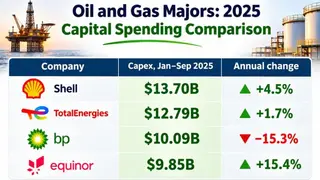
At COP31 in Antalya, Turkey, energy giants Shell, BP, TotalEnergies, Equinor, Aramco, and ADNOC face growing scrutiny over their capital allocation, with fossil fuel investments still dominating despite public commitments to renewables. Shell’s 2025 report shows $9.3 billion spent on upstream operations versus only $2 billion on low-carbon energy solutions. The disparity highlights the gap between corporate climate pledges and actual spending, especially as developing nations push for faster fossil fuel phaseouts.
At COP31 in Antalya, Turkiye, major oil and gas companies—Shell, BP, TotalEnergies, Equinor, Aramco, and ADNOC—are under growing scrutiny for the disparity between their public climate commitments and actual capital allocation. Despite pledges to transition toward low-carbon energy, fossil fuel investments remain dominant: Shell allocated $9.3 billion to upstream operations in 2025 versus only $2 billion to low-carbon solutions, while BP plans to spend $10 billion annually on oil and gas through 2027—less than one-tenth of that on low-carbon initiatives. TotalEnergies, though boasting 19 GW of net renewable capacity by year-end 2025, has a $4 billion annual Integrated Power strategy that includes flexible gas generation, not solely renewables. Equinor plans to maintain $10 billion in annual oil and gas spending while cutting power investment, and Saudi Aramco expects $50–55 billion in capex for 2026, with upstream projects dominating. These figures contrast sharply with Brazil’s voluntary fossil-fuel transition roadmap presented at COP31, which outlines country-specific measures to reduce reliance on coal, oil, and gas. Meanwhile, fossil fuel-producing nations like Saudi Arabia and Russia continue resisting binding production limits, highlighting deep divisions in global climate negotiations. The underlying tension stems from the gap between corporate greenwashing narratives and financial reality—where investment data reveals that even companies with renewable portfolios are still prioritizing fossil fuel expansion. What remains unresolved is whether regulatory pressure or investor demands will force a meaningful shift in capital allocation before the next major climate summit.
The revelations at COP31 could intensify public and institutional scrutiny of corporate climate accountability, particularly as investors, activists, and developing nations demand greater transparency in energy transition funding. If companies continue to underinvest in renewables relative to fossil fuels despite green branding, it may erode trust in voluntary climate commitments and push regulators toward mandatory disclosure or capital reallocation rules. The contrast between TotalEnergies’ large renewable capacity and its broader power strategy—including gas—illustrates how “green” metrics can be misleading without context, potentially affecting investment decisions across energy markets. A comparable precedent is the 2015 Paris Agreement, where initial pledges were later found insufficient; COP31 may serve as a similar inflection point if data like this drives stronger enforcement mechanisms. Moving forward, the real test will be whether financial markets begin pricing in transition risk more accurately or if regulatory bodies in Europe and beyond adopt stricter reporting standards for energy companies’ climate investments. The next few months could reveal whether these disclosures lead to policy shifts or remain symbolic—especially as developing nations push for faster fossil fuel phaseouts while major producers resist binding constraints.