Tech Giants’ AI Expansion Threatens Climate Goals Amid 75% Surge in Data Center Investment
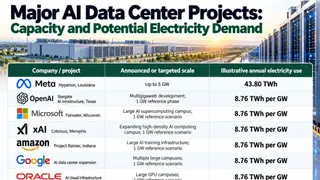
Microsoft, Amazon, Google, Meta, and Oracle are accelerating spending on AI data centers, with projected capital expenditure rising 75% to over $700 billion annually by 2026. The International Energy Agency warns that AI-driven data center electricity demand could reach 950 TWh by 2030, tripling current levels. Despite commitments to 100% renewable energy, Microsoft reported a 25% increase in emissions from its 2020 baseline, highlighting growing tension between climate pledges and infrastructure expansion.
In 2025, major tech firms—Microsoft, Amazon, Google, Meta, and Oracle—invested over $400 billion in AI infrastructure, with projections indicating a 75% increase to surpass $700 billion annually by 2026. This surge is driven by the rapid expansion of data centers to support generative AI workloads, which the International Energy Agency (IEA) forecasts will push global data center electricity demand to 950 TWh by 2030—tripling current levels. Despite commitments to 100% renewable energy, Microsoft reported a 25% rise in emissions from its 2020 baseline, with electricity consumption up 24% and purchased electricity emissions jumping 945% year-on-year. Amazon saw a 34% increase in electricity-related emissions, tied to over 1.2 GW of new data center capacity added in Q4 2025 alone. Google’s emissions rose 51% from its 2019 baseline, raising investor concerns about whether its 24/7 carbon-free electricity goal by 2030 is feasible amid escalating AI demand. Meta, while contracting 32.2 GW of clean energy globally, relies on annual portfolio matching rather than real-time grid supply, meaning its renewable claims do not guarantee continuous carbon-free operation. Oracle’s expansion has also raised questions about long-term power supply stability. The background includes prior industry trends toward digitalization and cloud computing, but the current scale of AI-driven infrastructure is unprecedented. These companies aim to maintain innovation leadership while meeting public climate pledges, yet their growth trajectories appear at odds with emission reduction targets. Unresolved issues include whether grid constraints—projected to delay 20% of planned data centers—will force reliance on fossil fuels, and whether regulatory or investor pressure will compel more transparent, real-time environmental reporting.
The rapid scaling of AI infrastructure by tech giants could strain national power grids, particularly in regions like Texas and West Virginia where new data centers are being built with natural gas dependency. This may lead to higher electricity prices and increased fossil fuel use, undermining broader climate goals even as companies claim renewable parity. Consumers, regulators, and investors may face growing scrutiny over whether corporate green claims are meaningful or merely symbolic. The situation echoes the early 2010s when cloud computing expansion raised similar concerns about energy use, but with AI’s demand intensity now far greater. Unlike past cases, today’s challenge involves not just volume but timing—real-time carbon-free supply is required, which existing renewable portfolios often fail to deliver. Markets may respond with increased investment in grid modernization and battery storage, while financial institutions could revise ESG ratings based on actual hourly emissions data. What remains uncertain is whether regulatory frameworks will evolve fast enough to enforce accountability, or if voluntary disclosures will suffice. The next phase may involve more rigorous third-party verification of real-time clean energy use, potentially reshaping how tech companies report sustainability performance.