COP31 Electrification Push Reveals $480 Billion Annual Grid Investment Gap by 2035
Turkey’s COP31 presidency has set a goal to increase electricity’s share of global final energy consumption to 35% by 2035, requiring annual grid investment to rise from $450 billion in 2025 to $930 billion. The International Energy Agency estimates that achieving this would necessitate doubling grid spending and increasing battery storage investment to $125 billion annually. Over 2,500 GW of projects currently await grid connections, highlighting major bottlenecks in permitting, equipment supply, and financing.
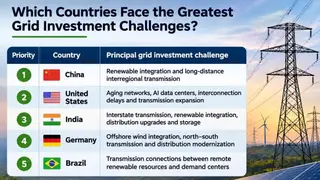
At COP31 in Antalya, Turkiye, the host nation launched its 35-by-35 electrification initiative, aiming to raise electricity’s share of global final energy consumption from about 23% to 35% by 2035. This target, formally highlighted by UN Climate Change, demands a dramatic scaling of infrastructure: annual grid investment must surge from $450 billion in 2025 to $930 billion by 2035—a $480 billion shortfall annually. The International Energy Agency (IEA), referencing its September 2026 Electrification Special Report, estimates that achieving this would require doubling grid spending and increasing battery storage investment from $80 billion to $125 billion per year. Over 2,500 GW of renewable generation, storage projects, and large electricity users remain stalled in connection queues worldwide, underscoring systemic bottlenecks in permitting, equipment supply, and financing. Transmission development is especially delayed, with new infrastructure taking five to 15 years to complete—far longer than solar or wind projects. Meanwhile, prices for critical grid components have nearly doubled over five years, complicating procurement. Major economies like China, the U.S., India, Germany, and Brazil face distinct but pressing needs: integrating renewable capacity across vast distances, modernizing aging grids, expanding interstate corridors, and connecting offshore wind to industrial hubs. Siemens Energy, GE Vernova, and Hitachi Energy are already responding with record orders—€24 billion for Siemens in fiscal 2026, a $42.2 billion backlog for GE Vernova’s Electrification segment, and a ₹2,000 crore investment by Hitachi in India. However, the report clarifies that these figures reflect demand and projected needs, not confirmed financing gaps or guaranteed capital commitments.
The push toward electrification could reshape global energy infrastructure, accelerating deployment of clean power while exposing deep structural weaknesses in grid planning and investment. Countries with large renewable ambitions may face prolonged delays if permitting and supply chains remain constrained, potentially undermining climate goals despite technological readiness. The surge in equipment orders suggests growing market confidence, but the lack of verified financing data means the actual risk of underinvestment remains uncertain. This situation echoes the early 2010s energy transition, when rapid solar deployment was hampered by grid bottlenecks and regulatory delays—highlighting how infrastructure lag can stall progress even with strong policy signals. The next critical phase will likely involve governments streamlining permitting, increasing public investment in transmission corridors, and fostering international cooperation on grid interconnections. Watch for whether multilateral institutions like the World Bank or regional development banks step in to bridge funding gaps, especially in emerging markets. Without such action, the $480 billion annual shortfall could delay decarbonization timelines, impact energy security, and affect industries reliant on stable electricity supply—particularly data centers and manufacturing.