Global Renewable Projects Stalled by Grid Bottlenecks as 4,400 GW Await Connection at COP31
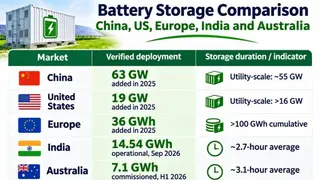
At COP31 in Antalya, Turkey, the world faces a growing grid connection crisis with nearly 4,400 GW of renewable and storage projects awaiting access to transmission networks. The International Energy Agency reports that battery storage applications alone exceed 1,500 GW, while hybrid project requests reach 600 GW, far outpacing current grid flexibility. Despite 108 GW of global battery storage added in 2025, most installations remain limited to two-hour durations, underscoring the need for longer-duration systems and infrastructure upgrades.
At COP31 in Antalya, Turkiye, a critical bottleneck has emerged in the global energy transition: nearly 4,400 GW of renewable generation, battery storage, and hybrid projects are stranded in grid connection queues, up from 3,500 GW in 2025. This includes over 1,500 GW of proposed battery storage and 600 GW of hybrid project applications, far exceeding current grid capacity and flexibility. Despite 108 GW of global battery storage added in 2025—led by China (63 GW), the US (19 GW), and Europe (36 GWh)—most systems still operate for only two hours, limiting their ability to shift surplus solar energy into peak demand periods. In China, despite massive additions of wind and solar capacity (430 GW in 2025) and battery deployment, renewable curtailment rose in early 2026, leading to increased coal use. Similarly, the US saw 160 GW of solar projects exit connection queues due to delays, while Europe’s solar-to-battery ratio remains at 8:1, indicating storage lags behind solar growth. India reports 14.5 GWh operational and 79 GWh under construction, but grid access and execution remain hurdles. The International Energy Agency (IEA), SolarPower Europe, and Climate Action Tracker are central to monitoring these trends, with developers seeking reliable revenue through arbitrage and ancillary services, while regulators face pressure to accelerate transmission upgrades and reform connection processes.
The grid bottleneck could slow the pace of decarbonization by locking away vast renewable capacity, potentially undermining climate commitments made at COP31. Consumers may face higher electricity prices if supply fails to meet demand during peak hours, while energy companies risk stranded assets if projects cannot connect in time. The imbalance between solar deployment and storage infrastructure mirrors earlier challenges seen in California’s early 2010s grid integration crisis, where rapid solar growth overwhelmed local distribution systems. Today’s situation may lead to similar market distortions—overbuilding of short-duration batteries without long-term storage solutions—unless regulatory reforms prioritize transmission planning and interconnection efficiency. Countries with strong renewable targets but weak grid infrastructure may see delayed progress, affecting investment confidence. What remains uncertain is whether governments will act swiftly enough to upgrade grids or if private developers will absorb the risk of prolonged delays. The next year will be crucial: if connection queues remain stagnant or grow, it could signal a systemic failure in energy planning that may require international coordination to resolve.