Egypt-India Startup Forum Launches First Edition with 55 Companies from Both Nations
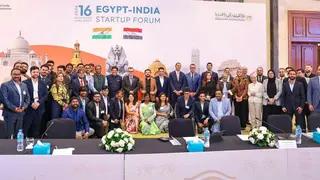
Dr. Ahmed Rostom, Egypt’s Minister of Planning and Economic Development, and Indian Minister of Commerce and Industry Piyush Goyal inaugurated the first edition of the Egypt-India Startup Forum in Cairo, bringing together 55 startups from both countries. The event focused on fostering innovation partnerships, sharing experiences, and advancing economic cooperation in technology and entrepreneurship, with plans for annual meetings.
The Egypt-India Startup Forum launched its inaugural edition on November 16–17 in Cairo, bringing together 55 startups from both nations under the co-inauguration of Dr. Ahmed Rostom, Egypt’s Minister of Planning and Economic Development, and India’s Minister of Commerce and Industry, Piyush Goyal. The event marked a formal institutionalization of bilateral cooperation in innovation and entrepreneurship, with a focus on technology, deep tech, agritech, and fintech. Both ministers emphasized the strategic importance of nurturing startups as drivers of economic growth, citing Egypt’s national development strategy and India’s proven success in building a vibrant startup ecosystem—home to over 100 unicorns. The forum also featured bilateral discussions between Rostom and Goyal on policy transfer, including India’s “Fund of Funds” model, government procurement access for startups, and regulatory streamlining. A key outcome was the agreement to hold the forum annually and deepen collaboration through shared participation in global events like India’s Startup Mahakumbh.
Egypt’s startup ecosystem, while still emerging, has shown promise with several firms expanding into African and Arab markets and even listing on international exchanges such as Nasdaq. The country aims to achieve five unicorns within five years—a target referred to as “5 in 5”—and sees India’s experience as a blueprint for scaling innovation. India’s success is attributed to strong policy frameworks, accessible funding mechanisms, and robust incubation networks. Egypt’s government seeks to replicate this through institutional coordination between public agencies, private investors, and startup accelerators. What remains unresolved is how effectively Egypt can implement these models given its current regulatory and financial infrastructure. The long-term success of the forum will depend on sustained political commitment, measurable progress on policy reforms, and actual capital flows into Egyptian startups.
The launch of the Egypt-India Startup Forum could significantly influence innovation ecosystems across the Global South by fostering cross-regional learning between two nations with complementary strengths—Egypt’s geographic access to Africa and the Middle East, and India’s mature startup infrastructure. If successful, this model may inspire similar bilateral or multilateral forums involving other emerging economies, potentially reshaping how innovation policy is shared beyond traditional Western-dominated channels. The forum may also stimulate private investment in Egypt’s tech sector by signaling international confidence, particularly among Indian investors looking for new markets. A comparable precedent is India’s earlier collaboration with Israel through the India-Israel Innovation Initiative, which led to measurable growth in joint R&D and startup ventures. However, unlike that case, Egypt lacks a well-established venture capital culture, so the real test will be whether policy dialogue translates into tangible funding and regulatory changes. What to watch for next includes the first annual follow-up meeting, public reporting on progress toward the “5 in 5” goal, and any new joint investment vehicles launched as a result of the forum.