Egyptian Minister Opens New iQor U.S. Office in Cairo, Plans $100M Expansion
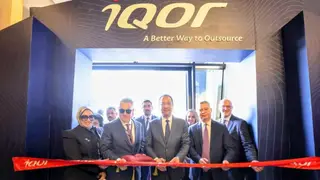
Egypt’s Minister of Communications and Information Technology, Rafeeq Hendy, inaugurated the new headquarters of American BPO company iQor in Cairo. The company has already invested $15 million in Egypt during 2025 and 2026 and plans to invest an additional $100 million over the next five to seven years. The Cairo facility currently employs 500 specialists offering services in eight languages and aims to expand to 5,000 employees by 2031. The government emphasized support for AI-driven service innovation and workforce development to position Egypt as a global IT services hub.
On April 5, 2026, Egyptian Minister of Communications and Information Technology Rafeeq Hendy inaugurated the new Cairo headquarters of American BPO firm iQor in Cairo New City, marking a significant milestone in Egypt’s growing role in the global digital services economy. The facility currently employs 500 specialists offering services in eight languages and is set to expand to 5,000 employees by 2031. iQor has already invested $15 million in Egypt during 2025 and 2026 and plans to add $100 million in investments over the next five to seven years. The company, founded in 1998 and operating in 10 countries with 45,000 employees, specializes in customer experience (CX) and business process outsourcing (BPO), leveraging AI across its operations. The event was attended by iQor executives including CEO Chris Crowley, Egypt’s IT minister, and top officials from the Information Technology Industry Development Agency (ITIDA). This development follows a memorandum of understanding signed between iQor and ITIDA in November 2025 during the Global Outsourcing Summit.
The expansion reflects Egypt’s strategic push to become a global IT services hub, supported by government initiatives to develop digital infrastructure and train youth in high-value tech skills. ITIDA’s leadership emphasized the importance of AI-driven innovation and the transition from basic outsourcing to advanced, value-added services. iQor’s AI-powered platforms contributed to 88% of its revenue in 2026, underscoring the shift toward intelligent automation in the sector. While the company aims to scale rapidly, the long-term success of this expansion depends on sustained government support, workforce upskilling, and the ability of Egyptian talent to meet global standards. Unresolved questions remain about how this growth will impact labor conditions, wage levels, and the broader digital economy, particularly as AI reshapes job roles.
This development signals Egypt’s deepening integration into the global digital services supply chain, particularly in AI-enhanced BPO—a sector increasingly dominated by automation and data-driven operations. The expansion could strengthen Egypt’s position as a preferred outsourcing destination, especially for Western firms seeking multilingual, tech-savvy talent. However, the reliance on AI may also accelerate the displacement of routine jobs, raising concerns about long-term employment stability and the need for continuous reskilling. Comparable to India’s IT boom in the 1990s, Egypt may be entering a phase of rapid sectoral growth, but without similar institutional depth and regulatory frameworks, the benefits may be unevenly distributed. The role of ITIDA in fostering innovation and attracting high-value investments will be critical. What to watch for next is whether Egypt can transition from low-cost labor to high-value digital services, and how effectively it manages the social and economic implications of AI-driven transformation.