Former Kosovo President Hashim Thaci Sentenced to 17 Months for Witness Tampering
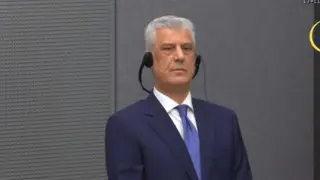
Hashim Thaci, former president of Kosovo, was sentenced to 17 months in prison by the Kosovo Specialist Chambers in The Hague for attempting to obstruct justice by influencing witnesses in his prior war crimes trial. The court found him guilty of contempt of court and violating confidentiality during meetings with former Kosovo Liberation Army member Fadil Fazliu, while clearing him of similar charges related to another meeting. Other defendants, including former intelligence chief Bashkim Smakaj and deputy prime minister Hajredin Kuci, were also convicted on related counts, though some received suspended sentences or were released due to time served.
Former Kosovo President Hashim Thaci was sentenced to 17 months in prison by the Kosovo Specialist Chambers in The Hague on November 17, 2026, for contempt of court and attempting to obstruct justice by influencing witnesses during his earlier war crimes trial. The court found him guilty of violating confidentiality and interfering with former Kosovo Liberation Army (KLA) fighters Fadil Fazliu and another unnamed ex-KLA member during meetings in July 2023, though he was cleared of similar charges related to a September 2023 meeting with former intelligence chief Bashkim Smakaj. Fazliu received a 12-month sentence but will be released due to time already served in detention. Smakaj was also sentenced to 12 months, while former deputy prime minister Hajredin Kuci received a one-month suspended sentence, and former mayor Isni Kilaj was acquitted. Thaci’s original war crimes conviction in September 2026 had already resulted in a 25-year prison term for murder, torture, arbitrary detention, and cruel treatment during the Kosovo conflict (1998–1999). His co-defendants—Jakup Krasniqi, Kadri Veseli, and Rexhep Selimi—were sentenced to 25, 18, and 13 years respectively. The Specialist Chambers, established under an international agreement due to concerns over Kosovo’s domestic judicial capacity, is staffed by international judges and prosecutors and has been a focal point of tension between national sovereignty and international justice.
The case reflects broader political tensions in Kosovo, where the KLA is widely revered as a liberation force. Thaci’s conviction has sparked protests among Albanian diaspora communities and supporters of the KLA, while Kosovo’s parliament passed a law amendment on October 6 to limit the Specialist Chambers’ powers—a move condemned by the EU and UK as undermining international commitments. The revised law remains under review by the president. The defense is preparing an appeal, and the outcome could influence perceptions of judicial independence in Kosovo. What remains unresolved is whether the political backlash will lead to further legal or diplomatic friction with international partners, especially given the court’s foundational role in addressing wartime atrocities.
The verdict may deepen divisions within Kosovo’s political and social fabric, where Thaci is viewed by some as a national hero and by others as a war criminal. His dual convictions—first for war crimes, then for witness tampering—could reinforce perceptions of selective justice or political targeting, particularly if the appeal succeeds. The broader impact may extend to international trust in Kosovo’s judiciary; efforts to limit the Specialist Chambers’ authority could be seen as an attempt to shield prominent figures from accountability, potentially undermining foreign investment and EU integration prospects. Comparable cases include the trial of Slobodan Milošević, whose prolonged proceedings highlighted how war crimes trials can become entangled with national identity and political legitimacy. What may unfold is a test of whether Kosovo can balance nationalist sentiment with international legal obligations. The next key development to watch is the appeal outcome and whether the EU or UK will impose diplomatic or financial consequences if the law change is finalized without consultation.