Protests Target Albania’s Political Establishment Ahead of 2027 Local Elections
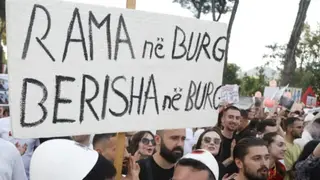
Ongoing protests in Albania are challenging the long-standing dominance of the Socialist and Democratic parties ahead of the May 2027 local elections, with demonstrators demanding accountability from Prime Minister Edi Rama. The unrest was highlighted during a football match where fans chanted for Rama’s resignation and displayed a banner honoring protester Erjon Vishkuli, who was injured by a rubber bullet. Journalists have also reported police violence during protests, raising concerns about civil liberties.
On November 12, 2026, tensions between Albania’s political establishment and civil society erupted during a football match between Albania and Finland at the Air Albania Stadium in Tirana. Fans disrupted post-match celebrations by chanting “Rama, resign!” and “Rama, go!”, directly targeting Prime Minister Edi Rama of the Socialist Party. A striking visual symbol of the protest was a large banner displaying a bloodshot eye, honoring Erjon Vishkuli, a 28-year-old protester who suffered a severe eye injury from a rubber bullet during earlier demonstrations in the capital. These events underscore a broader wave of unrest that has spread beyond Tirana, with reports of police violence against journalists during anti-government protests, raising alarms about civil liberties and state overreach. The protests are occurring ahead of the May 2027 local elections, a pivotal moment for Albania’s political landscape, as citizens grow increasingly dissatisfied with the entrenched dominance of the Socialist and Democratic parties. The Democratic Party, led by Sali Berisha, and the Socialist Party, under Edi Rama, are both preparing for the upcoming electoral contest, but the current unrest suggests a growing appetite for political change. What remains unclear is whether this discontent can coalesce into a viable alternative political force or remain fragmented.
The protests in Albania, particularly those centered on police conduct and political accountability, could deepen public distrust in state institutions and further strain the country’s democratic norms. The use of rubber bullets against demonstrators, especially when resulting in serious injuries like Vishkuli’s, may fuel long-term grievances and erode confidence in law enforcement. Journalists’ reports of abuse during protests highlight a troubling trend that could deter investigative reporting and weaken media independence—key pillars of a functioning democracy. If these tensions persist, they may impact Albania’s EU accession process, as the European Commission has previously linked progress to rule of law and civil rights improvements. A comparable case is the 2011–2012 protests in Serbia, where similar demands for accountability led to reforms but also prolonged political instability. In Albania’s case, the outcome may depend on whether the government responds with dialogue or repression. What to watch for next is whether the protests evolve into organized political movements or remain spontaneous, and how international observers, particularly the EU, will assess the situation ahead of the 2027 elections.