Four ASEAN Central Banks Formalize Local Currency Trade Framework
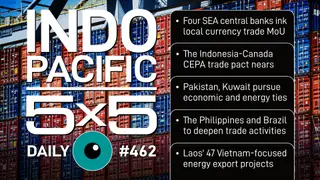
Bank Negara Malaysia, Bank Indonesia, the Bank of Thailand, and Bangko Sentral ng Pilipinas have signed a new MoU to promote the use of local currencies in regional trade and investment. The agreement replaces earlier bilateral arrangements and establishes a unified framework for cross-border transactions, aiming to reduce foreign exchange dependency and strengthen financial integration across Southeast Asia.
On November 13, 2026, Bank Negara Malaysia (BNM), Bank Indonesia (BI), the Bank of Thailand (BOT), and Bangko Sentral ng Pilipinas (BSP) signed a new Memorandum of Understanding (MoU) to formalize a unified Local Currency Transaction (LCT) Framework for cross-border trade and investment in Southeast Asia. This agreement replaces earlier bilateral arrangements established in August 2023 among BNM, BI, and BOT, marking a significant step toward deeper financial integration within ASEAN. The new framework aims to promote the use of local currencies—Malaysian ringgit, Indonesian rupiah, Thai baht, and Philippine peso—in settling transactions, thereby reducing reliance on the U.S. dollar and enhancing regional monetary sovereignty. The move is particularly timely as regional economies seek to mitigate foreign exchange volatility and transaction costs, especially amid global financial uncertainties. The participating central banks are committed to facilitating bilateral trade, investment, and other eligible transactions through this multilateral mechanism, though specific implementation details, such as settlement mechanisms and monitoring protocols, remain unspecified in the available reports.
The background to this development includes years of incremental progress toward regional financial cooperation, including earlier bilateral LCT agreements and growing regional awareness of the risks associated with dollar dependency. The shift from bilateral to multilateral coordination reflects a maturing regional strategy to build resilient financial infrastructure. The central banks involved are driven by shared goals: enhancing economic resilience, reducing foreign exchange exposure, and deepening financial integration across Southeast Asia. While the text does not specify individual leadership or institutional priorities beyond the stated objectives, the collective action suggests a strategic consensus among these central banks to strengthen regional financial autonomy. What remains unresolved is the timeline for full operational rollout, the extent of private sector adoption, and whether other ASEAN members—such as Singapore or Vietnam—will join the framework. Additionally, the long-term impact on regional currency stability and the potential for broader ASEAN-wide financial integration remains uncertain.
This agreement could strengthen Southeast Asia’s financial resilience by reducing dependence on the U.S. dollar in regional trade, potentially lowering transaction costs and hedging against external shocks. Businesses in Malaysia, Indonesia, Thailand, and the Philippines may benefit from smoother cross-border payments and reduced currency risk, particularly for importers and exporters. However, the success of the LCT Framework hinges on widespread private sector adoption, which may be slow without clear incentives or standardized infrastructure. The broader impact may ripple through regional financial markets, encouraging greater use of local currencies in bonds, trade finance, and investment vehicles. A comparable precedent is the eurozone’s integration, though ASEAN’s decentralized structure and diverse economic sizes present greater challenges. The real test will be whether the framework can scale beyond pilot projects and attract private institutions to adopt local currency settlements. What to watch for next is the pace of implementation, the inclusion of other ASEAN nations, and whether the initiative leads to deeper regional financial architecture, such as a shared clearing mechanism or currency swap lines.