India Launches $1.05 Billion Plan to Challenge China’s Container Dominance
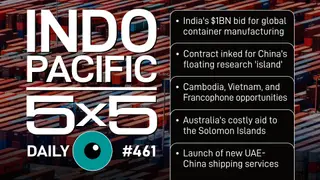
India has approved a 13-year, Rs.10,000 crore ($1.05 billion) scheme to expand domestic container manufacturing capacity tenfold, aiming to reduce reliance on Chinese supply and support the Make in India initiative. The program will boost annual production to 750,000 TEUs, create over 50,000 indirect jobs, and position India as a potential export hub for shipping containers. The move is part of broader efforts to strengthen maritime logistics resilience.
India has approved a 13-year, Rs.10,000 crore ($1.05 billion) plan to expand its domestic container manufacturing capacity tenfold, aiming to challenge China’s near-total dominance in global container production—currently responsible for over 90% of supply. The scheme, announced in the Union Budget 2026–27 and set to run through FY 2039–40, will boost annual output from current levels to 750,000 Twenty-foot Equivalent Units (TEUs), with the goal of establishing India as a competitive export hub for shipping containers. The initiative supports the broader Make in India campaign and seeks to strengthen maritime logistics resilience by reducing reliance on imports from China. It is expected to generate 3,000 direct jobs and over 50,000 indirect jobs across ancillary industries such as steel, wood, and paint manufacturing. The program will fund new facilities and upgrades to existing container plants, though specific locations or participating companies are not detailed in the report.
This move follows years of growing strategic concern over supply chain vulnerabilities, particularly in critical infrastructure sectors. India’s push reflects a broader regional trend toward economic decoupling from China, especially in manufacturing and logistics. The timing coincides with heightened geopolitical competition in the Indo-Pacific, where maritime infrastructure is increasingly viewed as a strategic asset. While no direct mention of military or security implications is made, the expansion could indirectly bolster India’s role in regional trade corridors. What remains unclear is how quickly India can scale production to meet global standards, whether foreign investors will participate, and how China might respond—potentially through pricing strategies or export restrictions. The success of this plan hinges on sustained policy support, infrastructure development, and market access.
India’s container manufacturing push could reshape regional supply chains by reducing dependence on Chinese imports, potentially lowering costs for Indian exporters and enhancing logistical autonomy. If successful, it may encourage similar initiatives across South Asia, especially in countries like Bangladesh and Vietnam that also rely heavily on imported containers. The move may also influence global trade patterns, particularly if Indian-made containers gain certification and acceptance in international shipping networks. However, the scale of investment—$1.05 billion over 13 years—raises questions about cost efficiency and whether India can achieve economies of scale comparable to China’s entrenched industry. A comparable precedent is India’s earlier push to develop domestic semiconductor manufacturing, which faced delays and cost overruns despite strong government backing. The container initiative may face similar challenges in workforce training, quality control, and export certification. Success could strengthen India’s position in global maritime trade, but failure might reinforce perceptions of policy overreach. What to watch for includes the pace of implementation, international buyer interest, and whether China responds with retaliatory measures or market adjustments. The long-term impact may depend less on production volume than on integration into global logistics networks.