Vukovar Marks 35 Years Since Fall Amid Persistent Ethnic Divisions
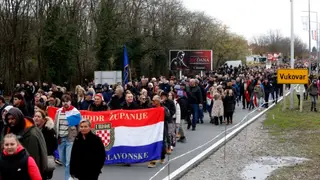
Thirty-five years after the fall of Vukovar during the Croatian War of Independence, the town remains ethnically divided between its Croat majority and Serbian minority. Political analyst Zarko Puhovski notes that while violence between the groups has ceased, efforts to rebuild trust have been slow and overly ambitious. The town’s history, marked by a three-month siege and the mass killing of 260 people at Vukovar Hospital, continues to shape its fragile reconciliation process.
On November 18, 2026, Vukovar commemorated the 35th anniversary of its fall during the Croatian War of Independence, marking a pivotal moment in the conflict’s bloodiest phase. The town, besieged for three months from 1991 by the Yugoslav People's Army and Serbian paramilitary forces, saw approximately 2,000 defenders resist 30,000 attackers. The siege ended in November 1991 with the massacre of 260 civilians—many wounded patients—at Vukovar Hospital, one of the largest war crimes in Croatia during the war. The town was nearly destroyed, and its population was ethnically divided, with a Croat majority and a Serbian minority. Despite the formal return of Vukovar to Croatian control in 1998 under the Peaceful Reintegration process, ethnic divisions persist. Schools remain segregated, cafés are informally divided by ethnic identity, and public life continues to reflect deep-seated separation. Political analyst Zarko Puhovski, a Zagreb-based scholar, argues that the post-war effort to rapidly restore unity was overly ambitious, urging instead a step-by-step approach of coexistence before reconciliation. He notes that while violent conflict has ceased—no Croat has killed a Serb, or vice versa, since 1998—this absence of violence has not translated into social cohesion. The annual Remembrance Procession, drawing thousands from across Croatia, underscores the town’s symbolic weight, yet Puhovski warns that the nation may be moving closer to wartime memory rather than distancing itself from it. The unresolved issue of commemorating victims from the opposing side—particularly Serbian soldiers buried in mass graves—remains unaddressed, with little political will among the Croatian majority to pursue such efforts. What is not yet known is whether future generations will see a shift in public sentiment or if institutional mechanisms will emerge to confront this legacy.
The continued ethnic division in Vukovar reflects broader challenges in post-conflict reconciliation across the Western Balkans, where symbolic memory often overrides practical integration. The town’s experience may influence how other war-affected communities in Croatia and Serbia approach commemoration and coexistence, particularly as younger generations inherit unresolved narratives. The annual remembrance events, while honoring victims, risk reinforcing collective trauma rather than fostering healing, potentially affecting civic trust and intergroup relations in wider society. Comparable to Strasbourg’s postwar normalization between France and Germany, Vukovar’s slow progress suggests that symbolic reconciliation requires sustained, deliberate effort beyond infrastructure rebuilding. The lack of formal recognition of Serbian war dead could hinder future cross-ethnic dialogue, especially if younger Croats view the conflict through a singular national lens. Meanwhile, tourism and local economic activity may remain sensitive to ethnic tensions, though the presence of tens of thousands of Serbian-registered vehicles in tourist areas suggests some level of functional coexistence. What may emerge in the coming years is a growing demand for inclusive memorialization—possibly driven by civil society or international actors—though the political will to act remains uncertain. Monitoring how commemorative practices evolve, and whether they shift from exclusive to shared narratives, will be key to understanding whether Vukovar can move beyond symbolic burden toward genuine social integration.